A single fireplace heats 300–1,000 square feet effectively, but won’t warm your whole house.
Here’s the problem: your chimney acts like a vacuum, pulling warm air up and out while cold air sneaks back in through gaps and leaks.
Open fireplaces lose 85–90% of their heat this way, forcing your central heating to work harder.
Zone heating with gas or electric fireplaces is more practical—they’re efficient and target where you actually spend time.
A Single Fireplace Heats 300–1,000 Square Feet: Here’s Why
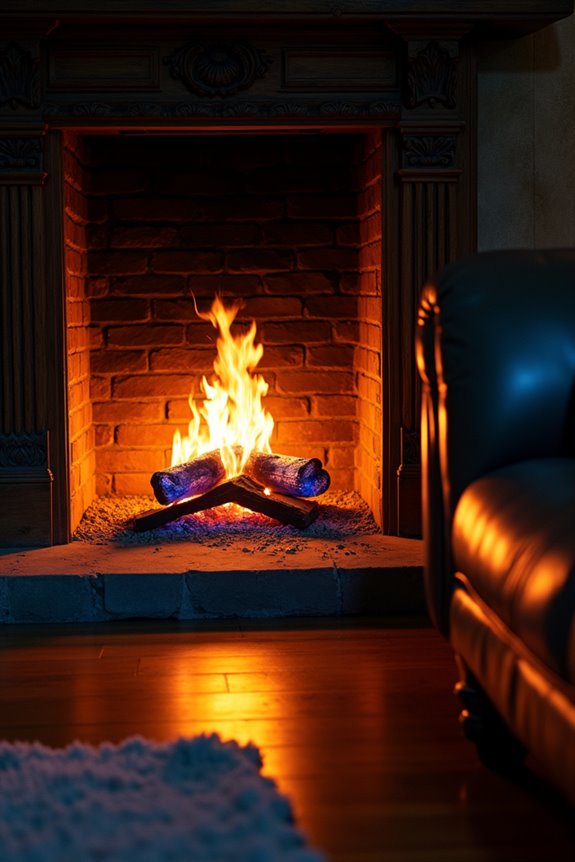
So, how much of your house can a fireplace actually warm? Here’s the reality: a wood-burning fireplace typically heats only 300 to 1,000 square feet effectively. Why such a limited range? Most of the heat loss happens up the chimney rather than circulating through your home. Your open fireplace produces 30,000 to 80,000 BTUs, but that heat radiates locally near the flames instead of spreading throughout your rooms. For effective whole-house heating, you’d need roughly 30–40 BTUs per square foot in cold climates. Your home’s layout matters too. Open floor plans help heat distribution, while closed-off rooms significantly reduce how far warmth travels. Bottom line: a single fireplace works best as supplemental heating, not your primary solution.
Why Wood Fireplaces Lose More Heat Than They Give
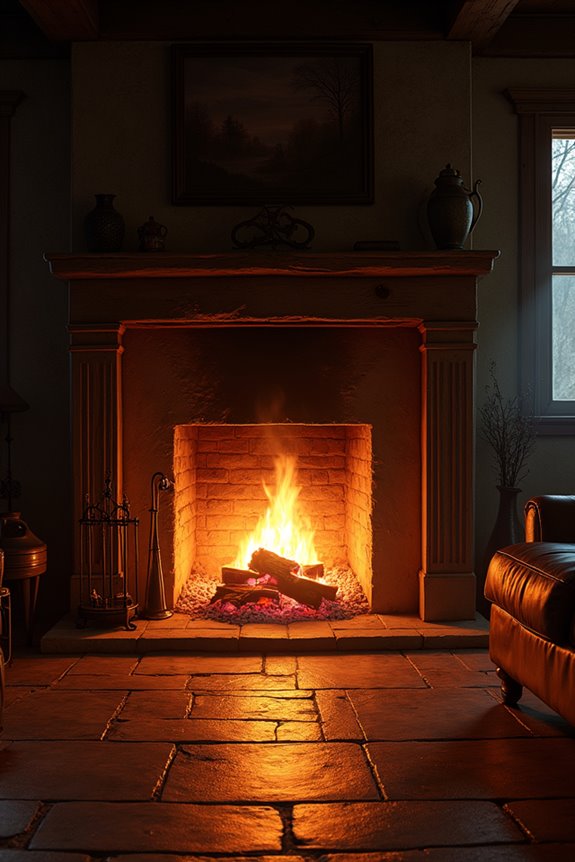
that cozy fireplace you’re sitting by could actually be making your house colder.
Open wood fireplaces lose more heat than they give because the chimney acts like a vacuum. As you enjoy the radiant heat near the flames, warm air gets pulled straight up and out through the chimney. Meanwhile, your home pulls in cold makeup air to replace it, creating a net heat loss throughout your house.
| The Problem | The Result |
|---|---|
| Chimney draft pulls warm air out | Your other rooms get colder |
| Combustion air needs oxygen from inside | Heated air escapes through leaks |
| Heat efficiency drops significantly | You lose more warmth than gained |
This happens because open wood fireplaces have poor heat efficiency. The radiant heat you feel nearby doesn’t compensate for the overall heat loss, leaving distant rooms chilly despite your crackling fire.
Gas Fireplaces for Zone Heating Efficiency
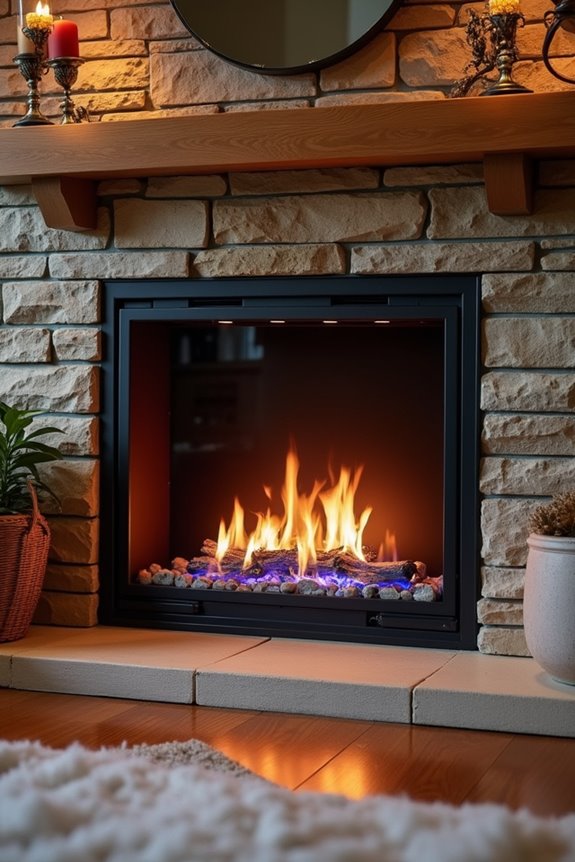
Add a heat kit or heat distribution system, and you have a powerful solution. Instead of warming just one room, you’re strategically targeting occupied spaces. This is zone heating—it’s smart, it’s efficient, and it saves money.
Gas fireplaces deliver 70-90% efficiency, plus instant warmth on demand. You’re not fighting your central heating system; you’re partnering with it. By concentrating heat where your family actually gathers, you’re maximizing comfort while minimizing waste. That’s what makes modern gas fireplaces effective for home heating.
Electric Fireplaces as Supplemental Heat
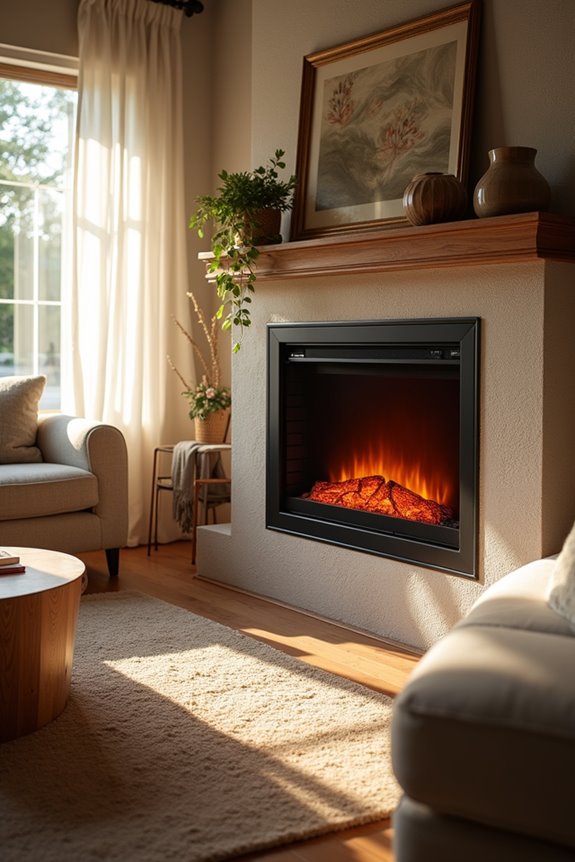
What if you could add warmth exactly where you need it, without the complexity of gas lines or venting? Electric fireplaces offer that flexibility. I’ve found they work best as supplemental heat, warming the specific room you’re in rather than your entire house.
| Feature | Benefit |
|---|---|
| 4,500–10,000 BTU | Targeted room heating |
| No venting needed | Easy installation |
| Visual ambiance | Comfort plus style |
Most models heat up to 800 sq. ft. effectively. Your heat output depends on the room’s size and layout. Think of electric fireplaces as your heating teammates—they handle zone heating while your main system manages whole-house warming. For larger homes, you’ll pair them with central heating. They’re practical, controllable, and they belong in any comfort-focused home.
Chimney Drafts and Whole-House Heat Loss
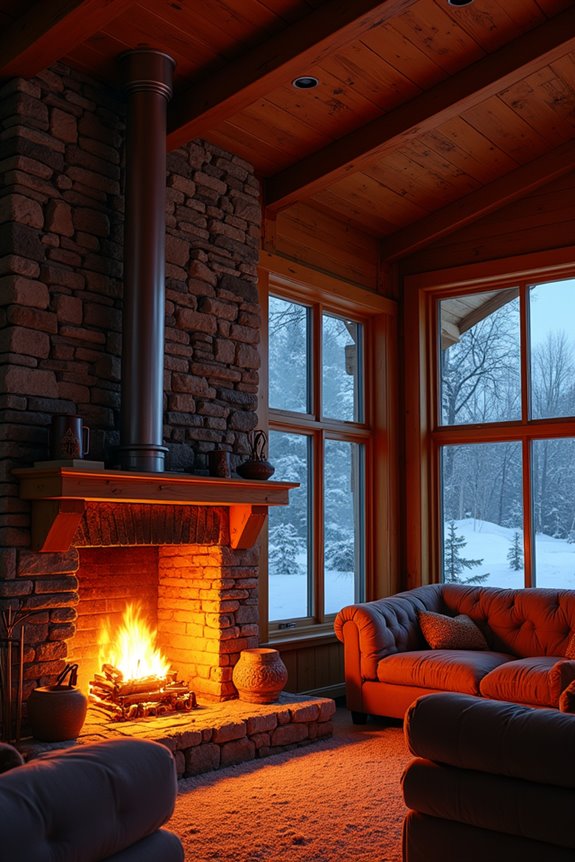
I need to speak frankly with you: your fireplace might actually be making your home lose heat overall. When you open that damper, you’re creating a vacuum effect that pulls warm air straight up and out through the chimney—think of it like opening a window in the middle of winter. The problem gets worse in newer, well-sealed homes, where your furnace has to work overtime to replace all that heated air escaping up the flue.
The Chimney Vacuum Effect
While your fireplace is burning, it’s actually pulling warm air right out of your home—and that’s a problem you need to understand. When you open the damper, you’re opening a direct pathway for heat to escape. The chimney draft creates a vacuum that sucks warm indoor air up the flue, accelerating heat loss faster than you’d think.
Here’s what happens: the stack effect causes warm air to exhaust upward quicker than through a regular window. In airtight homes, this problem gets worse unless you supply combustion air directly to the firebox. Your heating system works overtime to replace lost warmth, driving up energy costs.
The fix? Understanding this vacuum effect helps you make smarter fireplace choices and protect your home’s heat transfer efficiency.
Heat Loss Through Venting
How much heat is your chimney actually stealing from your home? It’s likely more than you think. When your damper opens, you’re creating a vacuum that pulls warm air straight up and out. Your fireplace needs combustion air to burn, and that air comes from inside your house, drawing heated air through leaks and gaps.
Here’s the real problem: venting doesn’t stop at the chimney. That vacuum effect pulls warmth from your whole home. You can reduce this loss by sealing around the chase where your chimney meets your roof. A better option is to provide dedicated combustion air directly to your fireplace using outside air. These fixes reduce heat loss significantly and keep more warmth where it belongs—inside your home.
Interaction With Central Heating
Your fireplace and your central heating system are actually working against each other, and you might not even realize it. When I use my fireplace, the chimney draft creates a vacuum that pulls warm air right out of my home. This fireplace heat loss forces my central heating to work overtime, basically heating air I’m losing up the chimney.
Here’s what happens in an airtight home:
- Strong chimney draft sucks up to 1,000 cubic feet of heated air per minute
- Central heating interaction becomes inefficient as systems compete
- Makeup air isn’t automatically supplied to replace lost warmth
- Heat efficiency drops significantly, raising energy bills
Without proper combustion air delivery and makeup air solutions, I’m literally paying to heat the outdoors. It’s a frustrating cycle, but understanding this dynamic helps me make smarter choices about fireplace use.
Comparing Fireplace Types by BTU Output and Efficiency
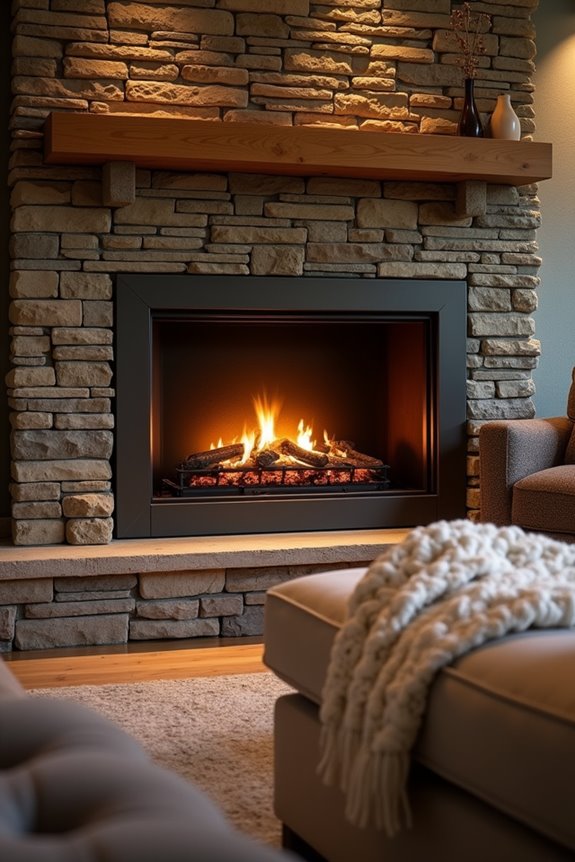
When you’re shopping for a fireplace, here’s what really matters: how much heat it actually produces, and how much of that heat actually stays in your home.
Wood-burning fireplaces sound romantic, but they’re honest about their limits. You’ll get 30,000–80,000 BTUs, yet most heat escapes up the chimney. An open fireplace? You might actually lose heat overall.
Direct-vent gas fireplaces hit 70%–90% efficiency. That’s warmth reaching your rooms.
Wood stove/inserts deliver the strongest performance for whole-house heating. They produce up to 80,000 BTUs at 70%–80% efficiency, outperforming traditional options.
Electric fireplaces stay modest at 4,000–10,000 BTUs—supplemental only.
The bottom line? Efficiency matters as much as output. You’re not just buying BTUs; you’re buying heat that actually reaches you.
Zone Heating to Maximize Fireplace Performance
Now that you know which fireplace produces actual heat, let’s talk about getting that heat where it counts. Zone heating lets you warm only the rooms you’re using, which can save up to 40% on heating bills. Here’s how to maximize your fireplace heat:
- Place your fireplace in frequently used zones like your living room
- Install a distribution kit to move heat to other rooms
- Use a multi-zone approach pairing your fireplace with your main heating system
- Provide dedicated combustion air and control your damper strategically
This approach works. You’ll feel warmer where you spend time, while avoiding wasted heat delivery to empty spaces. In well-insulated homes, zone heating improves how efficiently your fireplace heat warms your home.
Chimney Cleaning and Damper Sealing: Two Wins for Efficiency
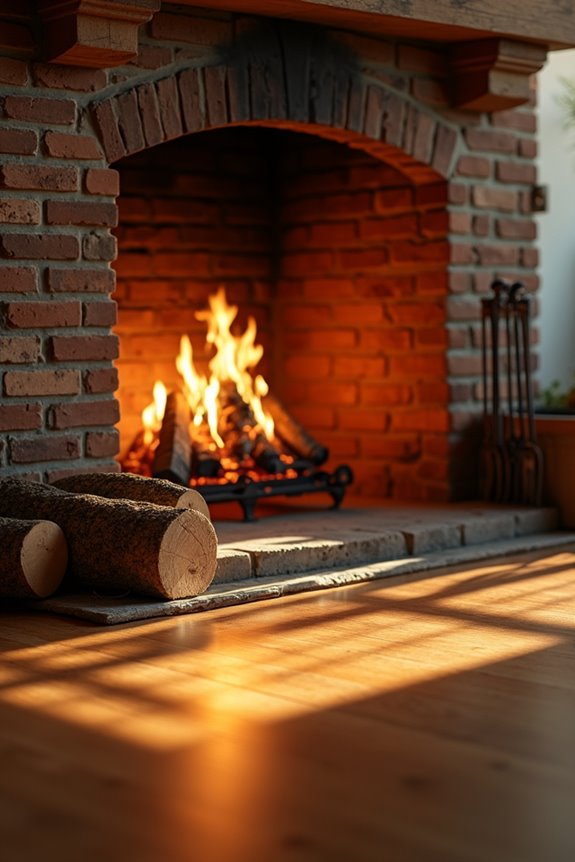
Two simple maintenance tasks—cleaning your chimney and sealing your damper—work together to keep heat in your home and your fireplace running safely.
Regular chimney cleaning removes creosote buildup, which reduces fire risk and maintains efficient airflow. When your chimney flows properly, your fireplace performs better. Sealing your damper when you’re not burning stops warm air from escaping up the flue. Top dampers block cold drafts too, keeping your space warmer during idle periods.
| Task | Benefit | Impact |
|---|---|---|
| Chimney Cleaning | Reduces creosote | Safer operation |
| Damper Sealing | Prevents heat loss | Lower bills |
| Glass Doors | Improves efficiency | Better warmth |
| Regular Checks | Maintains airflow | Steady heat distribution |
| Proper Operation | Supports safety | Reliable performance |
These fireplace maintenance efforts work as your heat distribution team, keeping comfort and safety aligned.
Fireplace Inserts vs. Open Fires: When an Upgrade Pays Off
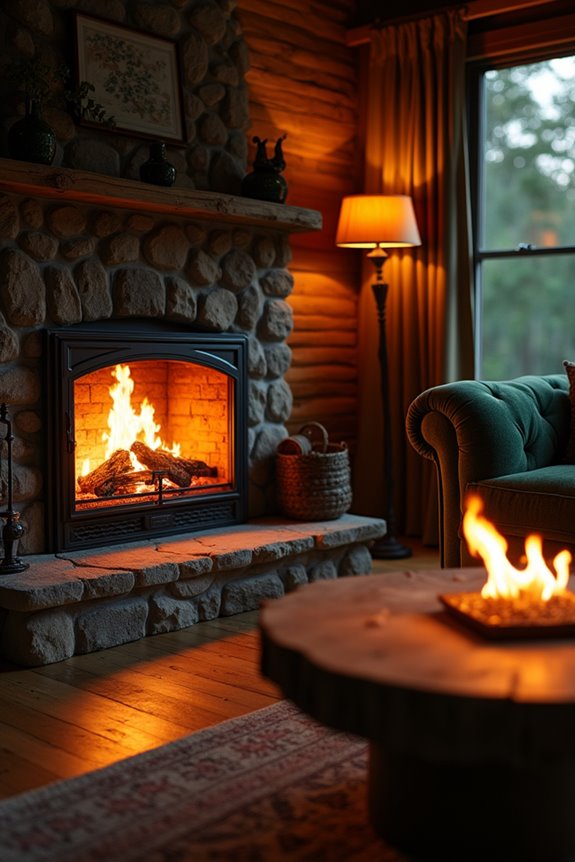
How much heat’s actually making it into your room right now? If you’re relying on an open fireplace, I’ll be honest—probably not as much as you’d think. Traditional open fireplaces produce 30,000–80,000 BTUs but lose most of that warmth straight up the chimney.
Traditional open fireplaces lose most heat up the chimney, delivering only 10–15% efficiency despite producing 30,000–80,000 BTUs.
Here’s where fireplace inserts make a difference:
- Achieve 70–80% efficiency versus 10–15% for open fireplaces
- Seal the firebox tightly, stopping heat loss
- Distribute warmth evenly with blower systems
- Enable zone heating in your most-used spaces
Gas inserts offer instant control and broader heat distribution. Adding a hot-air distribution kit amplifies results. The real payoff comes when you install these in living rooms or family rooms where you actually spend time. That’s where efficiency meets comfort, and your heating dollars finally work for you.