
Even tiny light leaks sabotage your sleep by suppressing melatonin—your brain’s rest signal. Blackout curtains blocking 95–100% of light trigger deeper, more restorative sleep while calming your blood pressure and body temperature. Darker fabrics like navy or black work best, especially when mounted wide and floor-length to eliminate side gaps. This setup creates a genuine rest sanctuary in your bedroom. Keep scrolling to discover which curtain type matches your sleep style and how to measure for complete darkness.
How Light Disrupts Your Sleep and Why Curtains Matter?
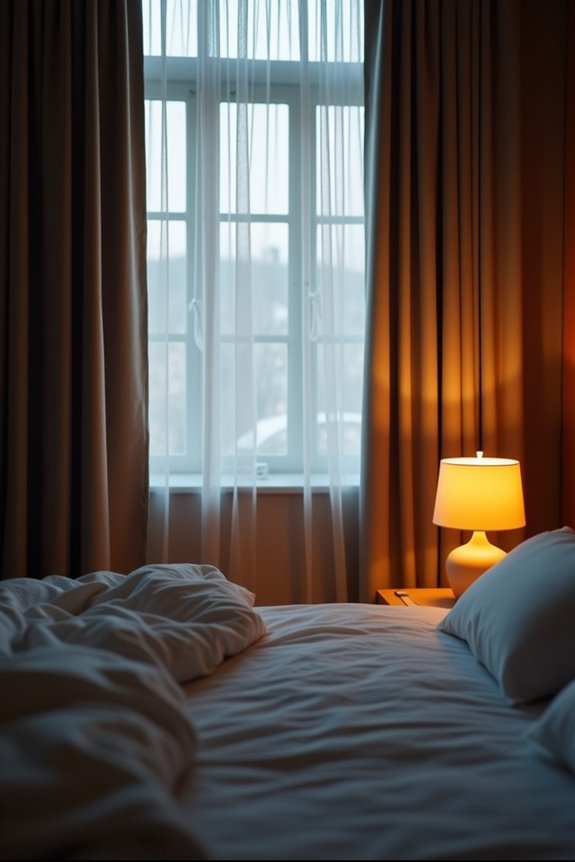
Have you ever noticed how a single beam of streetlight sneaking through your window can keep you awake? That’s light leakage at work, and it’s more disruptive than you’d think.
Even small amounts of light trick your brain into staying alert. When light hits your eyes, your body holds back melatonin—the hormone that makes you drowsy. Without it, your blood pressure stays elevated, your body temperature won’t drop, and sleep becomes impossible.
Here’s where blackout curtains come in. By blocking 85-95% of outside light, they give your brain permission to wind down. For light sleepers, 95%+ blackout curtains work best.
Creating genuine darkness improves sleep. You’re not fighting against your biology anymore. Your body naturally produces melatonin, your temperature drops, and rest actually happens. That’s the power of the right window coverings.
Blackout vs. Room Darkening: Which Do You Actually Need?
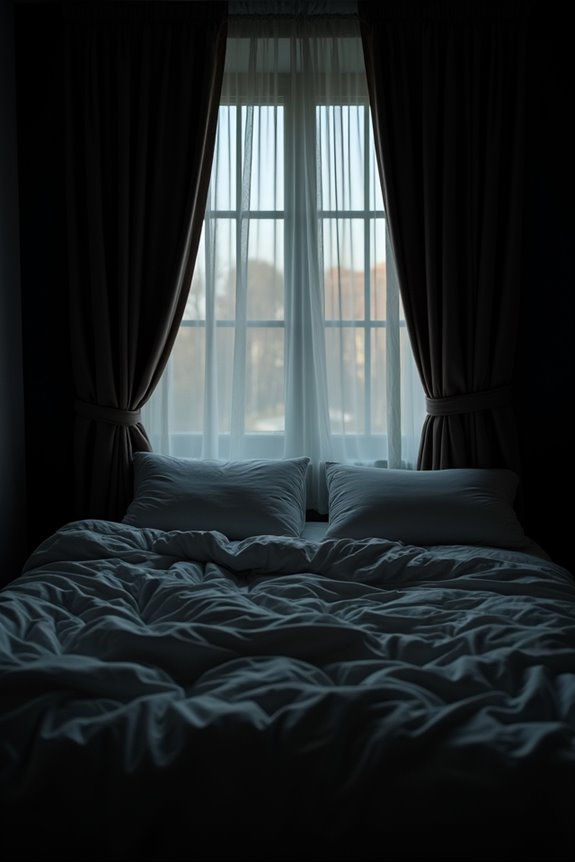
Now that you know light disrupts sleep, you’re probably wondering: should you go all-in with blackout curtains, or will room darkening curtains do the job?
Here’s the honest truth: it depends on your situation. Blackout curtains block 95–100% of light, making them ideal if you’re a night-shift worker or extremely light sleeper. Room darkening curtains block 85–95%, which still helps your body produce melatonin without total darkness.
Blackout curtains block 95–100% of light; room darkening curtains block 85–95% and still support melatonin production.
If you have east-facing windows where morning sun floods in, blackout curtains are worth it. But if you just want to reduce glare and afternoon brightness, room darkening curtains work well.
The key consideration? Make sure your curtains block out light effectively by hanging them wide—about 2–2.5 times your window width—to minimize side-light leaks.
Fabric Matters: Velvet vs. Blackout Lining vs. Cotton Blends
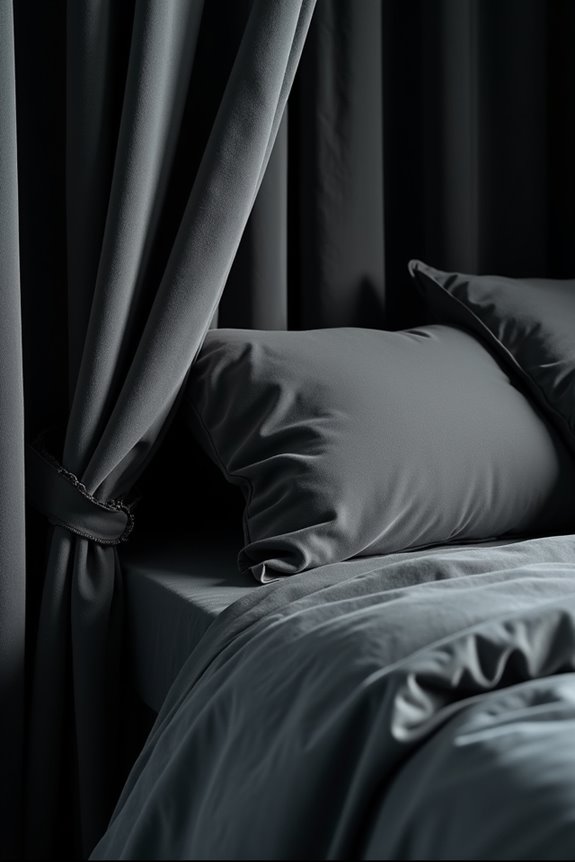
Now that you know whether you need true blackout or room-darkening curtains, let’s talk about the fabrics that’ll actually get you there—because not all materials block light equally. I’ll walk you through velvet, blackout linings, and cotton blends so you can pick what works best for your bedroom and your budget. Each one offers different advantages, from light-blocking power to that natural feel you might prefer.
Velvet’s Light-Blocking Properties
Why does velvet work so well for blocking light when other fabrics fall short? Velvet’s dense, plush texture creates natural barriers that trap light before it reaches you. I find it blocks about 85-95% of light, which gives you solid darkness without needing specialized blackout curtains.
Here’s what makes velvet special: its thick pile absorbs light instead of letting it pass through. You’ll notice the difference immediately when you close velvet panels around your bed. The fabric also reduces sound, so you’re getting multiple benefits.
If you want maximum darkness, though, pairing velvet with blackout lining gives you 95%+ light blockage. That combination creates the darkness night-shift sleepers need. You’re investing in better sleep and privacy at the same time.
Blackout Lining Effectiveness
When you’re ready to upgrade from velvet alone, blackout lining delivers superior darkness—we’re talking 95-100% light blockage compared to velvet’s solid 85-95%. Blackout lining works well because it’s engineered specifically for this job, not just a pleasant side effect.
| Feature | Velvet | Blackout Lining |
|---|---|---|
| Light Blockage | 85-95% | 95-100% |
| Temperature Control | Excellent | Good |
| Durability | High | High |
| Maintenance | Shows dust | Easier care |
| Cost | Moderate | Budget-friendly |
What makes blackout lining special: you can layer it behind cotton or linen for that natural look you want, plus the serious darkness you need. Look for fabrics explicitly labeled blackout—that guarantee matters. Thicker, multi-layer constructions reduce those sneaky side-light leaks too.
Cotton Blend Practicality
If blackout lining feels too heavy or industrial for your taste, cotton blends offer a smart middle ground. I’ve found they’re perfect when you want curtains that look natural while still delivering serious light-blocking power. Cotton with blackout lining gives you the best of both worlds, honestly.
Here’s what makes cotton blends practical for your bedroom:
- They achieve 95%+ light-blocking when lined properly, matching blackout fabric performance
- Natural cotton appearance fits any décor style without looking clinical or harsh
- Easy to care for and wash, making maintenance simpler than heavier velvet options
You’re getting stylish curtains that actually work. Cotton blends let you have both form and function without compromise. Your sleep quality benefits from both.
Size, Width, and Mounting: The Math Behind Light-Proof Curtains

When you’re trying to block light from sneaking into your sleeping space, the size and placement of your curtains matter just as much as the fabric itself. I’ll walk you through the specific measurements and mounting techniques that’ll give your bed a dark, private space—no more guessing or settling for partial coverage. Let’s break down the math so you can hang your curtains with confidence.
Calculating Proper Curtain Width
How wide should your bed curtains actually be? I’ll break down the math that works ordinary fabric into an effective light-blocking solution.
Your curtain width should measure 2 to 2.5 times your window or bed width. This isn’t arbitrary—wider curtains create fewer gaps, which directly improves light blocking and privacy.
Here’s why this matters:
- Undersized curtains leave visible gaps that leak light and compromise your sleep
- Extra width ensures panels overlap at the center, sealing out unwanted brightness
- Fuller fabric pools slightly on the floor, adding another layer of light protection
Start measuring your bed’s width, multiply by 2.5, and you’ve got your target. This approach feels generous, but it’s exactly what you need for genuine darkness and that private sanctuary feeling.
Optimal Rod Height Placement
Where should your rod actually go? Mounting matters more than you’d think. You’ll want to install your rod near the ceiling, not at the window frame’s top. This placement creates a taller room feel while helping curtains block light from above—those sneaky rays that slip in otherwise.
Position your rod about four to six inches above the window frame. This gap lets your curtains extend higher, capturing more light. When you mount higher, your curtains drape fuller and create better coverage overall.
Rod height placement is the foundation for everything else. Get this right, and your curtains block light far more effectively. You’re building a light-blocking system that starts from the top down.
Floor Length Coverage Standards
You’ve nailed the rod height—now comes the math that actually stops light from sneaking in. I’m talking about floor-length curtains and width calculations that work together like a team.
Here’s what creates your bedroom as a genuine sleep sanctuary:
- Floor-length coverage: Your curtains should skim the floor slightly or puddle a bit, creating that seamless barrier that blocks light completely
- Width multiplier: Grab curtain panels that measure 2–2.5 times your window width for adequate coverage
- Center overlap: Position panels so they meet in the middle, eliminating those sneaky light-blocking gaps
When you follow this formula, you’re not just hanging fabric—you’re engineering darkness. That floor-length, light-blocking setup signals to your brain that sleep time has arrived. I’ve found that getting these measurements right makes a real difference in how well you actually rest.
Color and Maintenance: Choosing Dark Curtains That Hide Dust
When I’m choosing curtains for my bedroom, I’ve learned that color does far more than just set the mood—it shapes how well I sleep and how often I’ll actually want to clean them.
Why Dark Colors Work
Dark curtain colors like black, navy, and charcoal block light more effectively than lighter options, helping me produce melatonin for deeper sleep. They’ve also improved my cleaning routine. Medium to dark fabrics hide dust brilliantly, so my curtains stay looking fresh longer between washes.
| Color | Light Blocking | Dust Visibility | Maintenance |
|---|---|---|---|
| Black/Navy | Excellent | Hidden | Low |
| Light/White | Good (95% if blackout) | Visible | High |
| Gray | Very Good | Minimal | Medium |
The Trade-off
Light-colored curtains can achieve up to 95% light blockage if they’re genuine blackout fabrics, but they show every speck of dust. I prefer darker curtain colors that keep my bedroom looking polished and feel like a true sleep sanctuary.
The Melatonin Effect: How Blackout Curtains Boost Sleep Science
When you shut out the light with blackout curtains, you’re actually triggering your body’s natural sleep chemistry—your brain starts pumping out melatonin, the hormone that tells you it’s time to rest. This light-blocking effect does more than just make your room dark; it helps regulate your circadian rhythm, so your body knows when to wind down and when to wake up. By keeping your sleep environment pitch-black, you’re setting yourself up for deeper, more restorative rest, particularly if you work nights or deal with early morning sun streaming through your windows.
Light Blocking and Melatonin
the darker your bedroom, the better you’ll sleep.
When you’re in a truly dark space, your body kicks into gear. Blackout curtains block 95–100% of light, triggering melatonin production—that’s the hormone that tells your body it’s time to rest. I’m talking real darkness here, not just dim.
Here’s what happens when melatonin floods your system:
- Your blood pressure drops, making you feel calmer
- Your body temperature lowers, signaling deep sleep mode
- Your circadian rhythm stays on track, helping you sleep consistently
Light blocking is necessary for quality rest. Whether you’re a night-shift worker sleeping during the day or you’re dealing with streetlights outside, blackout curtains create the darkness your body craves. You’re not fighting against your own biology anymore; you’re working with it.
Circadian Rhythm Regulation
How does your body know when to sleep? Your circadian rhythm—your internal 24-hour clock—relies heavily on light signals. When darkness arrives, your brain releases melatonin, a hormone that tells you it’s time to rest. This is where blackout curtains become useful.
By blocking 95–100% of light, blackout curtains signal to your body that it’s nighttime whenever you need it to be. You’re not just creating darkness; you’re aligning your physiology with your schedule. This matters if you work irregular hours or live in a bright environment.
Darker fabrics like black and navy perform this function best. When you use blackout curtains, you’re giving your circadian rhythm the clear signals it needs—helping you sleep deeper, wake refreshed, and feel synchronized with your life.
Sleep Quality Improvements
Why does darkness feel so revitalizing? When you sleep in true darkness, your body floods with melatonin—the chemical that makes you drowsy and keeps you asleep longer. I’ve found that blackout curtains, blocking 95-100% of light, significantly improve my sleep quality.
Here’s what happens when darkness surrounds you:
- Your blood pressure drops, creating a calmer physical state
- Your body temperature lowers naturally, deepening rest
- Side-light leaks vanish with properly overlapped, wide curtains
You’re not just sleeping longer; you’re sleeping better. Room darkening curtains (85-95% blocking) also work well if you want flexibility. The key? Consistency. Your brain learns that darkness means restoration time, and that’s when real recovery happens.
Light Sleepers and Shift Workers: Customized Blackout Solutions
Does your sleep disappear the moment sunlight creeps into your room, or do you find yourself working nights when everyone else sleeps?
You’re not alone. Light sleepers and shift workers need serious solutions, and blackout curtains deliver exactly that.
For Light Sleepers
I recommend 95%+ blackout curtains that pool slightly on your floor. This extra coverage blocks sneaky side-light leaks that typical curtains miss. You’ll notice the difference immediately—deeper, more restful sleep.
For Shift Workers
You need fortress-level darkness. Layer your blackout curtains with roller blinds behind them. This double barrier creates the complete darkness your body needs for daytime sleep.
Both groups benefit from measuring your windows carefully and positioning curtains to extend beyond the frame. Your sleep quality depends on it.
Temperature Control and Sound Dampening: Beyond Light Blocking

Your bed curtains do more than block light—they’re actually working hard to keep your room at the right temperature and quiet down outside noise. I’ve found that velvet and blackout fabrics create insulating layers, trapping warm air in winter and reflecting heat during summer. This temperature control means you’re sleeping more comfortably without cranking your thermostat.
The sound dampening benefit caught my attention. These thicker materials absorb noise from traffic, neighbors, and street sounds, creating a quieter space. Here’s what makes them effective:
- Velvet’s dense weave absorbs sound waves naturally
- Layered fabrics multiply noise reduction throughout your room
- Blackout linings muffle external disturbances significantly
You’ll notice the difference immediately—fewer disruptions mean deeper sleep. Combined with light blocking, your bed curtains create a comfortable, peaceful environment where you actually rest well.
Three Sizing Mistakes That Leak Light (and How to Avoid Them)
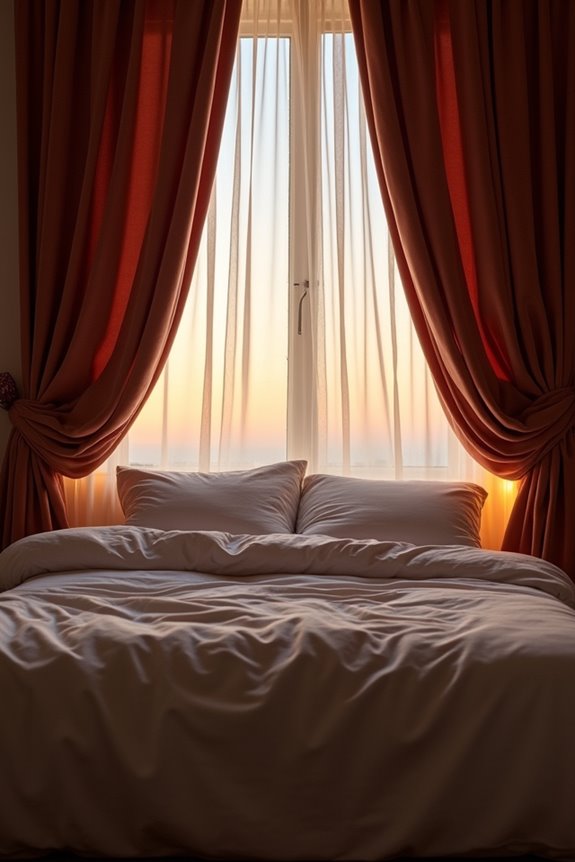
Here’s the thing about bed curtains—they look great hanging there, but if they’re not sized right, light sneaks in around the edges and ruins everything.
The three biggest mistakes I see:
First, curtains that are too narrow let light leak through the sides. You need fabric that’s 2 to 2.5 times your window width. Second, panels that don’t overlap in the center create a gap where light pours through. Make sure they meet and overlap slightly when closed. Third, hanging your rod too low wastes potential. Mount it closer to the ceiling to block overhead light and prevent gaps above.
Get these three things right, and your sleep space will work the way it should.
Washing and Care: Keeping Your Blackout Curtains Effective
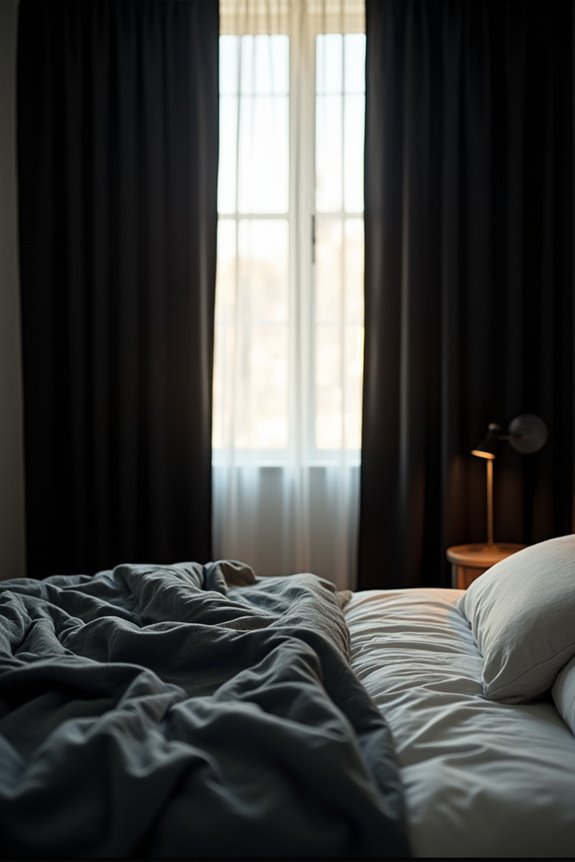
What good is a blackout curtain that’s lost its blocking power? I’ve learned that proper care instructions are important in maintaining your light control investment. Here’s what I recommend:
- Vacuum regularly using a soft brush attachment to remove dust that dims their effectiveness
- Check manufacturer labels before washing, as some blackout fabrics need gentle cycles or hand washing
- Air dry whenever possible instead of machine drying, which can damage the light-blocking coating
I treat my curtains like I’d treat anything I depend on. When you follow these simple steps, your blackout curtains stay effective season after season. You’re protecting your sleep quality, and that’s worth the minimal effort.