Yes, fireplace heat can damage your TV, but it’s preventable. The heat warps internal components and degrades picture quality over time, especially if your TV sits directly above the flames. Here’s what I recommend: keep at least 24 inches between your fireplace and TV, maintain wall temperatures under 100°F, and use heat deflectors or mantels as shields. Electric fireplaces pose the lowest risk since they produce minimal heat. The right setup protects your investment, and there’s plenty more to discover about making this work safely.
Can Fireplace Heat Actually Damage Your TV?
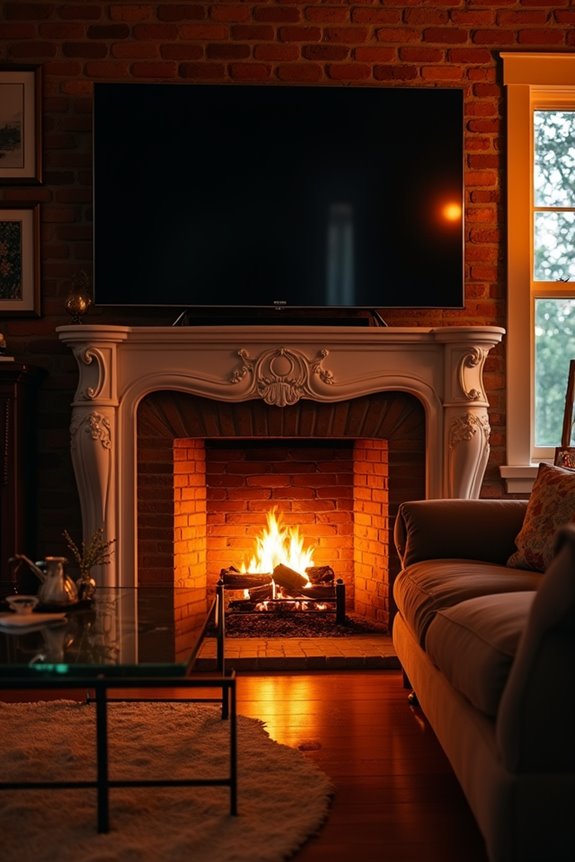
Yes, fireplace heat can damage your TV, especially if you’ve mounted it directly above the unit. I’m not trying to scare you—I just want you to understand the real risk.
Fireplace heat can damage your TV, especially if mounted directly above. Understand the real risk before installation.
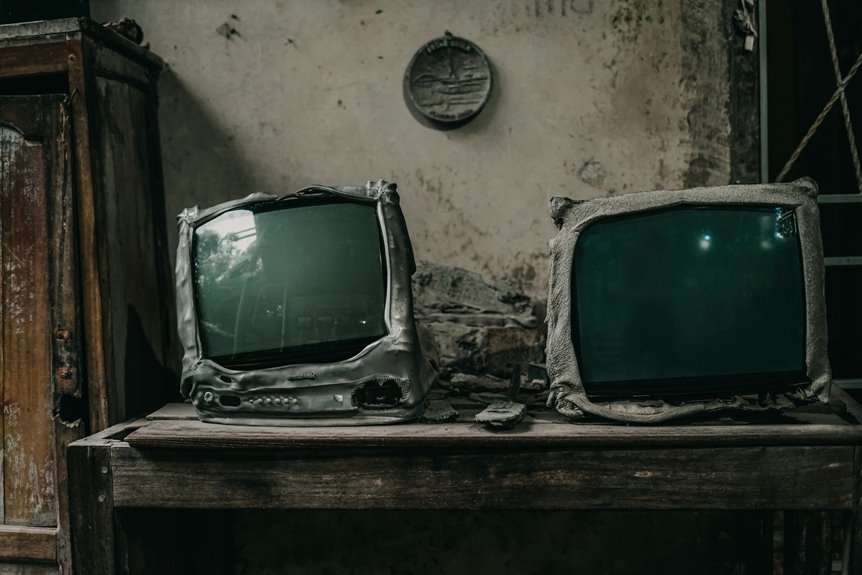
When your fireplace runs, it pushes intense heat upward. That prolonged exposure can warp internal components, damage circuits, and degrade your picture quality over time. It’s not immediate, but it’s cumulative.
The good news? You have solid solutions. Install heat shields between your fireplace and TV. Use a mantel deflection to redirect heat away. Keep proper clearance distance—check your fireplace specs (some need 250mm, others 460mm minimum). These steps protect your investment.
TV above fireplace doesn’t have to mean damaged TV. Smart placement and protective barriers work together to keep your setup safe and functional.
How Different Fireplace Types Damage Electronics
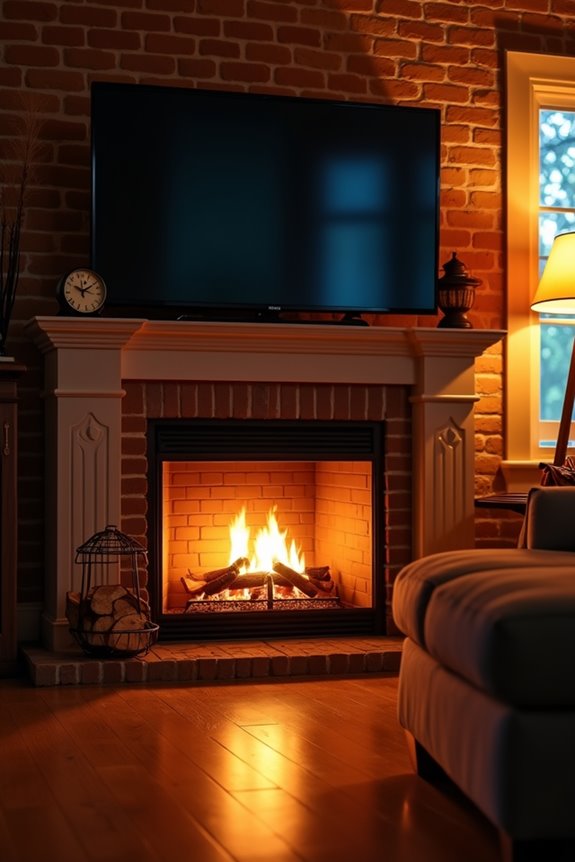
Not all fireplaces create the same heat risk for your TV. Understanding each type helps you protect your setup better.
| Fireplace Type | Heat Output | Radiant Heat Risk | TV Safety Level |
|---|---|---|---|
| Wood-Burning Masonry | High, unpredictable | Very high | Lowest |
| Gas Fireplaces | Moderate, steady | Moderate | Moderate |
| Electric Fireplaces | Low, adjustable | Low | Highest |
Wood-burning fireplaces throw unpredictable heat spikes at your TV, causing serious heat damage. Gas models warm steadily but still need a heat shield and proper TV clearance. Electric fireplaces offer the safest option with minimal fireplace heat and adjustable settings.
Stone surfaces absorb and radiate heat, intensifying exposure risk. Always follow manufacturer clearance specifications—they’re non-negotiable for protecting your electronics.
Safe Fireplace-to-TV Distance and Temperature Thresholds
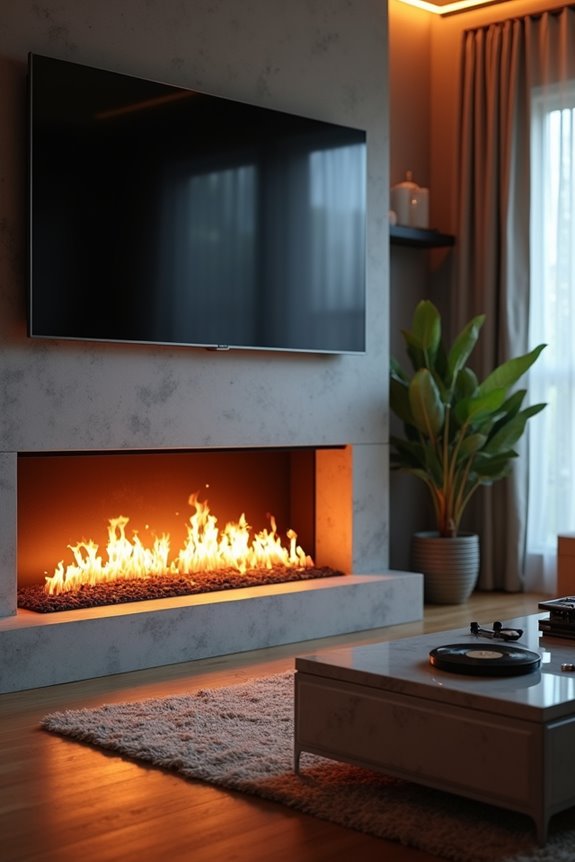
I’ll help you understand the safe distances and temperature limits that protect your TV from fireplace damage. The key is knowing that you’ll want to maintain at least 24 inches between your fireplace and TV, though more space is always better depending on your fireplace type. I’ve found that monitoring the wall temperature where you’re mounting your TV—keeping it under 100°F—gives you a reliable safety checkpoint that works regardless of whether you’re using gas or electric heat.
Minimum Distance Guidelines
Before you mount that TV above your fireplace, here’s what you need to know: distance matters, and it matters a lot. I’d recommend keeping at least 24 inches between your TV and the fireplace opening. This space helps protect your screen from heat damage and gives you room to maneuver if you’re using a full-motion mount that pulls things closer.
But distance is only half the equation. You’ll also want to check the actual heat at your mounting location using a wall thermometer. Aim to keep things under 100°F for long-term safety, though TVs can technically handle up to 125°F. Consider adding deflection methods—like a mantel or heat shield—to redirect radiant heat away from your screen. Test first, mount second.
Temperature Safety Thresholds
How hot can your TV actually get before things go wrong? Most TVs handle temperatures up to 125°F, but I’d recommend keeping your environment under 100°F for long-term reliability. Here’s what I mean: your TV’s internal components start struggling when heat builds up.
Here’s your action plan:
- Check your TV manual for its specific temperature tolerance
- Use a thermometer at your mounting location to measure actual heat
- Maintain at least 24 inches of clearance between your fireplace and TV
- Deploy heat deflection strategies like mantel shields or protective cabinetry
These deflectors redirect radiant heat away from your TV’s underside, protecting vulnerable components. Think of clearance and heat deflection as your TV’s bodyguards—they work together keeping dangerous temperatures at bay.
TV Mounting Solutions That Block Fireplace Heat
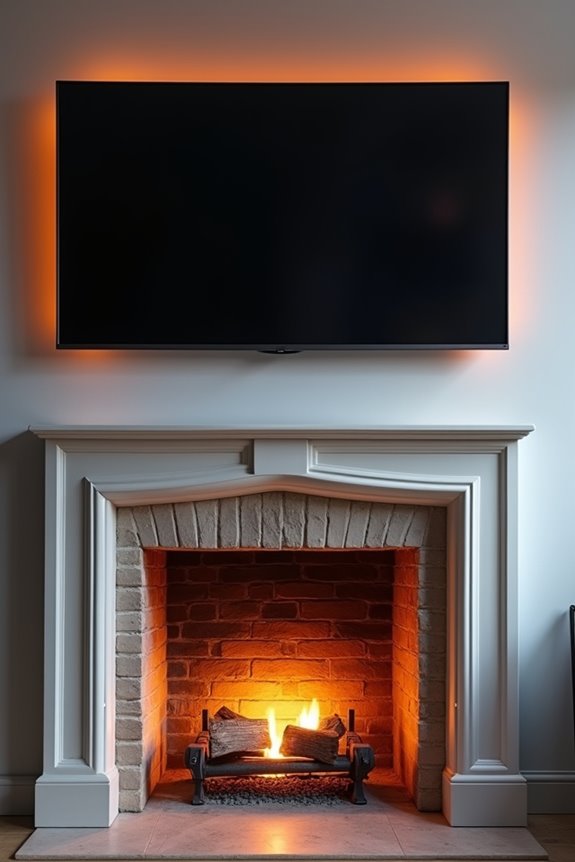
Smart mounting choices can actually protect your TV from fireplace heat while giving you a better viewing experience. I’ve found that full-motion mounts with vertical movement let you lower your TV to eye level, reducing neck strain and keeping the screen away from intense heat. You can also install a mantel above your fireplace—it deflects rising heat upward, shielding your TV effectively.
Here’s what I recommend: pair these solutions with heat-deflecting strategies like protective deflectors or enclosures. Check your wall temperature stays under 100°F where your TV mounts. When you combine proper mounting with heat protection, you’re safeguarding your investment while creating a comfortable, safe viewing setup that works better.
Using Mantels, Framing, and Positioning to Deflect Heat
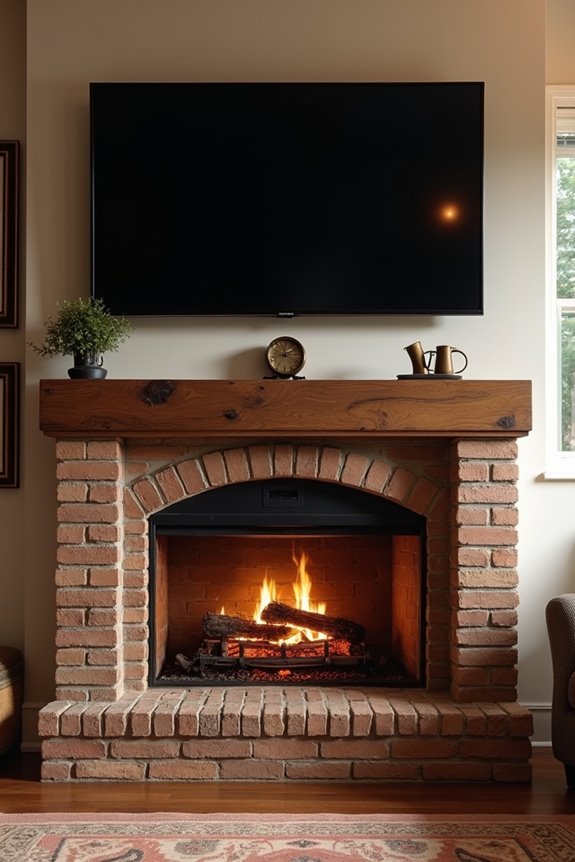
I’ve found that your mantel can work like a shield, deflecting rising heat away from your TV if you position it strategically and install the right barriers. By combining smart placement—think recessing your TV or using a protective frame—with heat-deflecting materials, you’ll create multiple layers of protection that improve airflow around your electronics. Let me walk you through the specific techniques that’ll help you keep your TV safe while maintaining a fireplace look you want.
Mantel Shield Installation
When you’re positioning your TV above a fireplace, a well-designed mantel can provide a protective barrier against heat damage.
A quality mantel shield acts as a protective layer between flames and your screen. During installation framing, position the mantel to create an air gap that allows heat to rise away from your TV. This setup provides effective heat deflection while keeping your equipment safe.
What matters: verify proper heat clearance by checking your fireplace manufacturer’s guidelines. Work with an expert to confirm your mantel design blocks rising heat effectively. The shield’s angle and materials determine how well it redirects warmth away from sensitive electronics. Get this right, and you’re protecting your investment while enjoying your fireplace with confidence.
Strategic Heat Deflection
Beyond just installing a protective mantel, you need to think about how heat actually moves around your TV setup. Strategic positioning makes a real difference. Use full-motion mounts to create extra mounting distance between your screen and the flames—pull that TV forward when you’re enjoying the fire. Your mantel acts as a heat shield, but framing techniques during installation boost this protection by creating deliberate ventilation paths. Consider adding custom heat deflectors too; manufacturers often supply these specifically for this purpose. Maintain at least 24 inches of clearance, following your TV’s manual. When you combine proper distance, tilting mounts, deflection accessories, and smart ventilation, you’re protecting your investment. It’s about layering your defenses, not relying on just one strategy.
Optimal TV Positioning
Your mantel’s real superpower isn’t just looking good—it’s actively pushing heat away from your TV.
I recommend positioning your TV at eye level using a full-motion mount. This setup does double duty: you’ll avoid neck strain while keeping safe distance from heat sources below. Most manufacturers suggest maintaining at least 24 inches of clearance between your TV and fireplace opening.
Here’s what I’ve found works best:
- Install a mantel to deflect rising heat upward, away from your screen
- Use proper framing around your mounted TV for additional shielding
- Choose mounting height carefully—eye level viewing beats any aesthetic compromise
- Respect clearances religiously; they’re non-negotiable for protection
Strategic positioning creates a space where comfort and safety work together without interruption.
Electric vs. Gas: Which Is Safer for Your TV?
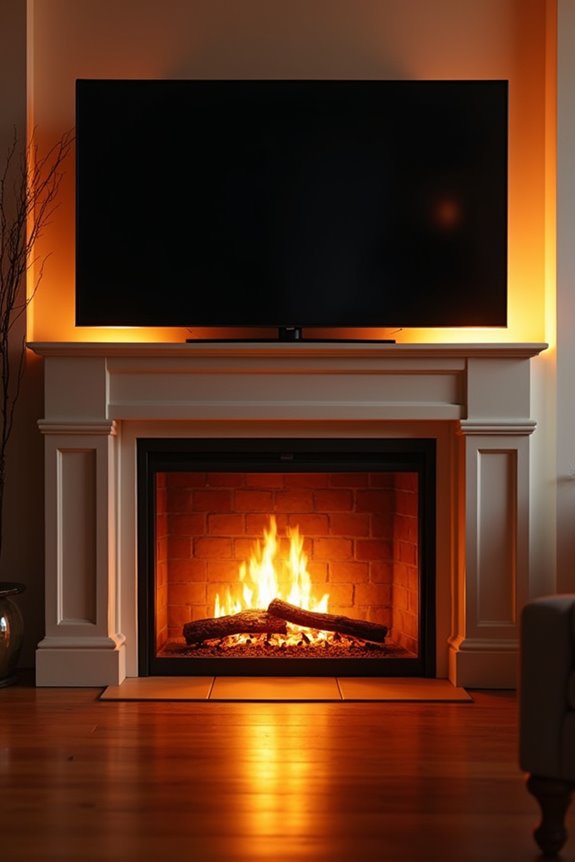
How do you choose between an electric and gas fireplace when you’ve got a TV hanging above it? Here’s the truth: electric fireplaces are your safer option. They produce lower heat, skip the open flames, and often have cool-to-touch exteriors with adjustable heat settings. You get warm comfort without the worry.
Gas fireplaces? They’re trickier. They generate significant radiant heat that can climb toward your TV. You’ll need to follow strict clearance requirements—sometimes 250 mm to 460 mm depending on your model. That means mounting your TV higher and possibly adding heat shields or deflection strategies.
The key is following your manufacturer’s guidelines closely. Electric gives you peace of mind. Gas demands careful planning. Either way, you have options that work.
Protective Accessories to Shield Your TV From Fireplace Heat
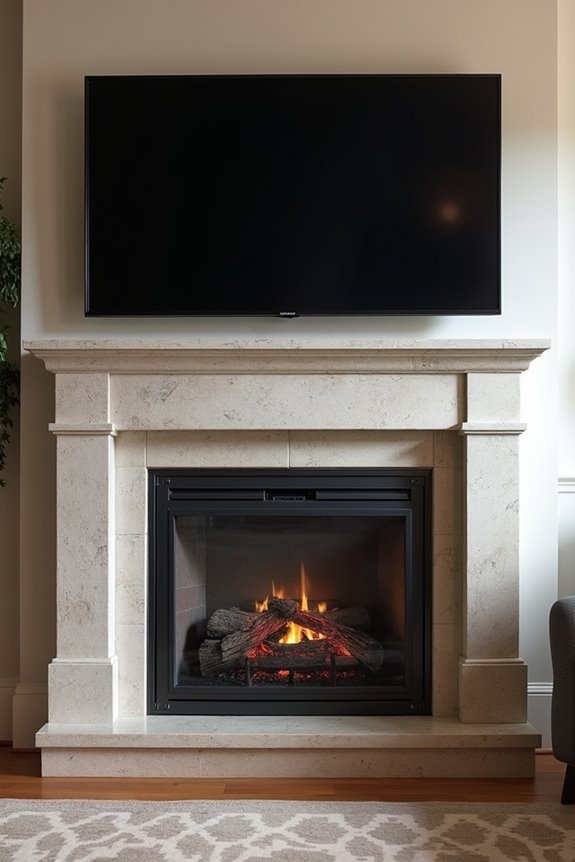
When you’re protecting your TV from fireplace heat, think of accessories as your first line of defense. Strategic additions help keep your setup safe.
A heat deflector redirects radiant heat away from your TV’s underside—Jetmaster supplies quality options designed specifically for this purpose. Mounting a mantel above your fireplace naturally deflects heat upward, away from electronics sitting above it.
For serious protection, consider a TV shield enclosure like those from TV Shield. These climate-controlled cabinets manage temperature while offering weather resistance and security.
Check heat clearance requirements carefully. Different fireplace models demand specific distances—Heat & Glo needs 350mm, Mezzo requires 460mm, Horizon only 250mm. Always verify your manufacturer’s guidance to confirm proper spacing and maximum protection for your investment.
Your Fireplace and TV Setup: A Planning Checklist
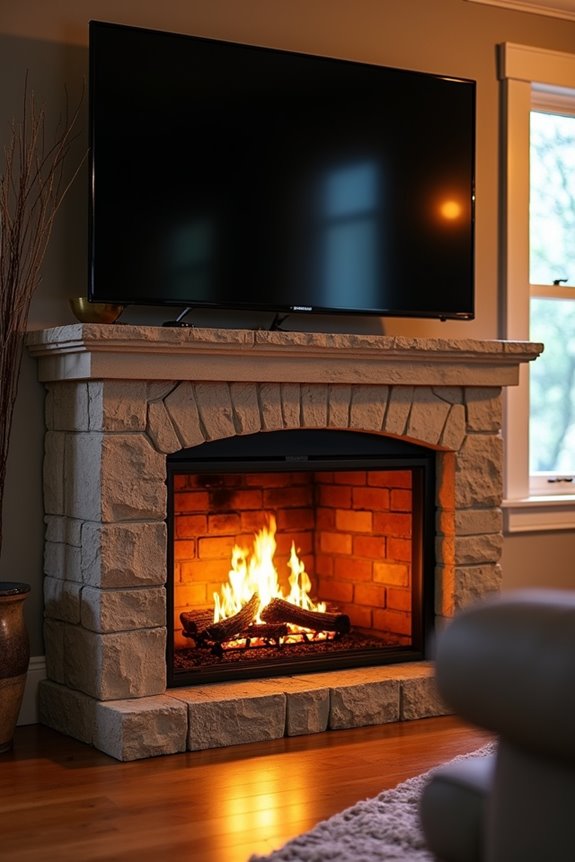
Your Fireplace and TV Setup: A Planning Checklist
Success starts with a solid plan—and I mean this literally. Before you mount that TV above your fireplace, grab a notebook and work through these essentials with me.
What you’ll verify:
- Fireplace type (gas, wood-burning, electric)
- Wall temperature at mounting clearance
- Heat deflection strategy
- Mounting system style
- Required TV above fireplace height
Your next move: Contact a WE LOVE FIRE expert. They’ll review your fireplace heat exposure and confirm safe mounting clearance for your setup. Snap photos of your space, share them, and get dealer guidance on heat shields or mantels that’ll protect your investment.
This homework matters. You’re building a setup that’ll give you years of comfortable movie nights without worry.