
I measure from my rod straight down to the floor—that’s my foundation. Then I pick my style: float (½ inch above for a crisp, modern look), break (kissing the floor for balanced style), or puddle (extending 3–6 inches for a luxurious effect).
Kitchens? Float or break works best.
Bedrooms? Break length provides privacy.
Living rooms? I go puddle for that formal appearance.
The trick’s matching your choice to what that room actually needs, whether that’s light control, privacy, or visual impact.
The Three Curtain Lengths Explained: Float, Break, and Puddle
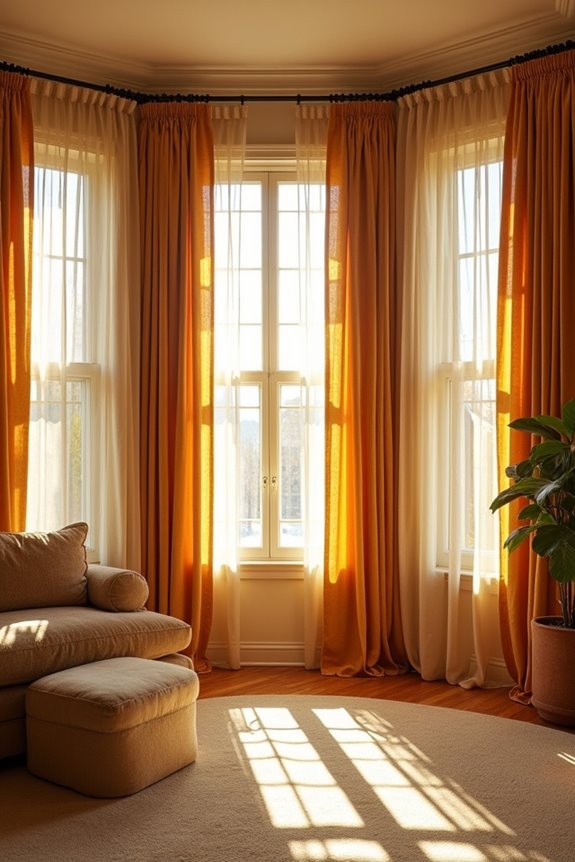
Ever wonder why some curtains look polished while others seem off? The key lies in curtain length. Mastering three styles—float, break, and puddle—will improve your window treatment significantly.
Float sits ½ to 1 inch above your floor, creating that crisp, modern vibe. This works well for level floors and functional panels.
Break length kisses the floor lightly, adding 1–2 inches to your rod-to-floor measurement. It’s universally flattering. Uneven floors? Break works perfectly.
Puddle extends 3–6 inches beyond the floor for an elegant, luxurious room aesthetic. It’s bold and dramatic.
Each style affects your space differently. Float feels streamlined. Break feels balanced. Puddle feels opulent. Measure carefully from rod placement down—that’s your foundation. Choose what matches your room’s personality.
Choosing Your Curtain Length by Room Type
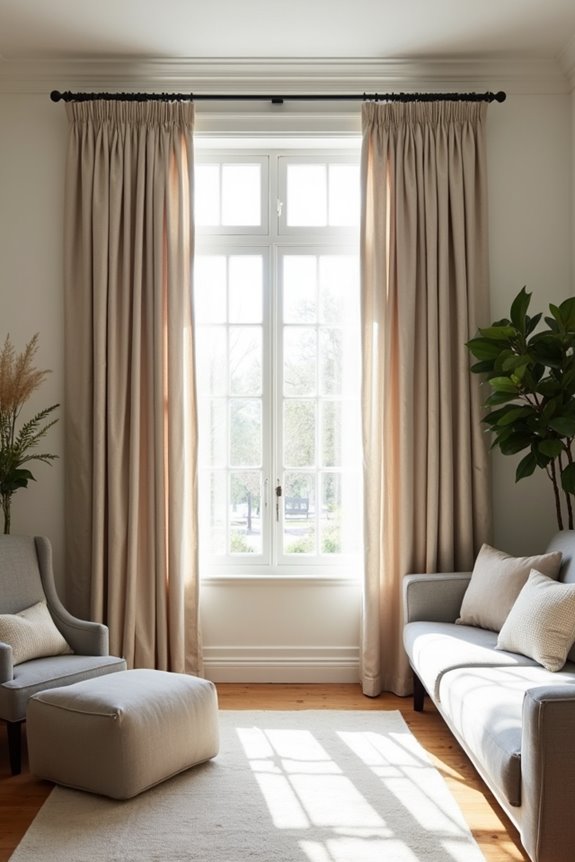
I’ve found that where your curtains land matters just as much as how they look, because each room has its own job to do. Your living room calls for elegance and that floor-length polish, your bedroom needs privacy control you can depend on, and your kitchen demands practical solutions that handle moisture and mess. Let me show you how to pick the right length for each space, so your curtains work for your needs.
Living Rooms And Elegance
How’d you like to make your living room feel taller, more sophisticated, and luxurious? Curtain length is a key factor in achieving this. The right window treatment improves your space significantly.
| Curtain Length | Effect |
|---|---|
| Floor Grazing | Versatile, flattering, functional |
| Float-Length | Modern, crisp, clean silhouette |
| Puddled Length | Formal, luxurious, elegant |
Here’s what I’ve learned: raise your rod 8–10 inches above the window frame to visually heighten the room. Extend it 6–10 inches beyond each side for full light control when open. Floor grazing and float-length work beautifully for everyday living, while puddled length adds 3–6 inches for formal elegance. Longer curtains improve perceived room height and privacy. Choose stable fabrics to keep those bottom edges perfectly aligned.
Bedrooms For Privacy Control
When it comes to bedroom curtains, privacy and light control are your main priorities, and that changes how you’ll want to hang them. I’d recommend choosing blackout curtains or heavier fabrics in floor-length styles—they work best for creating a private bedroom environment.
For a polished look, aim for break-length curtains that sit about 1 cm above your floor. This curtain length prevents dust collection while maintaining a refined appearance. If you want something modern, float-length works, though it may compromise privacy.
Here’s my tip: if you’ve got high ceilings, raise your curtain rod height 8–10 inches above the window frame. This elongates your room visually. Measure from rod to floor to achieve your desired effect.
Kitchens Require Practical Solutions
Unlike bedrooms, where you’re focused on privacy and darkness, kitchens demand a totally different approach to curtains. I’ve learned that practicality wins here, and you’ll want to prioritize easy-to-clean fabric over everything else.
What works best for kitchen curtains:
- Choose float-length or break-length styles that hover just above the floor or kiss it slightly
- Select moisture-resistant, light-filtering materials that resist grease and spills
- Consider café or valance options paired with sheer panels for privacy without bulk
Position your rod higher if you’ve got base cabinets nearby. This maximizes natural light while keeping fabric away from countertops. Your practical length choice keeps cleaning manageable and prevents fabric from absorbing kitchen mess.
Why Fabric Type Affects Your Curtain Length
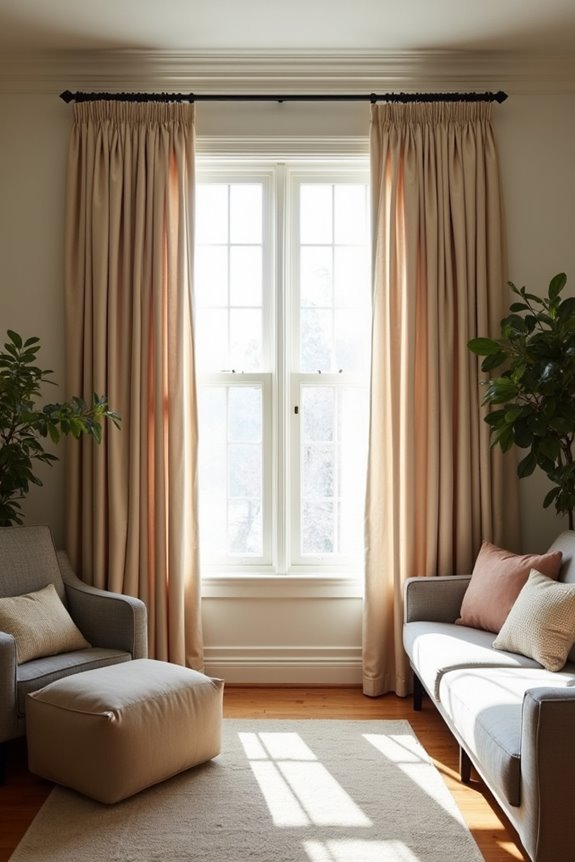
Why does fabric matter so much when you’re measuring for curtains? Natural fabrics like linen and wool behave differently than synthetics. They shift, relax, and sometimes shrink over time, which means your carefully measured curtain length might change after a few months.
Choosing break-length or puddle-length works best for these materials. Break-length grazes the floor gently, while puddle-length pools slightly. Both accommodate the relaxation that happens under gravity. If your fabric tends to shrink, go shorter to maintain that crisp, floor-grazing appearance you’re after. Planning ahead with natural fabrics prevents uneven hems and keeps your curtains looking tailored as fibers settle into their new home.
How to Measure From Rod to Floor
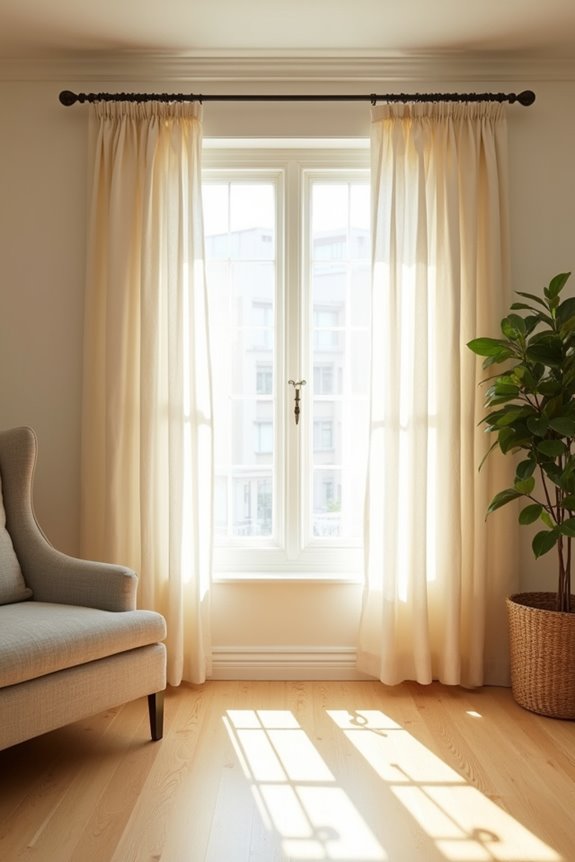
Getting your rod-to-floor measurement right is the foundation of perfectly hung curtains. I’ll walk you through the process so you can achieve the exact curtain length you need.
Here’s how to measure accurately:
- Start at your drapery rod and run a straight line down to your finished floor surface
- Account for any curtain hardware—rings, grommets, ties, or tabs—in your measurement
- Note your rod-to-floor measurement before calculating your final length
From there, adjust based on your style preference. For float-length curtains, target ½ inch clearance above the floor. Break-length curtains need 1–2 inches added to that measurement. If you want puddle-length drama, add 3–6 inches for that luxurious effect.
Common Mistakes That Make Curtains Look Wrong
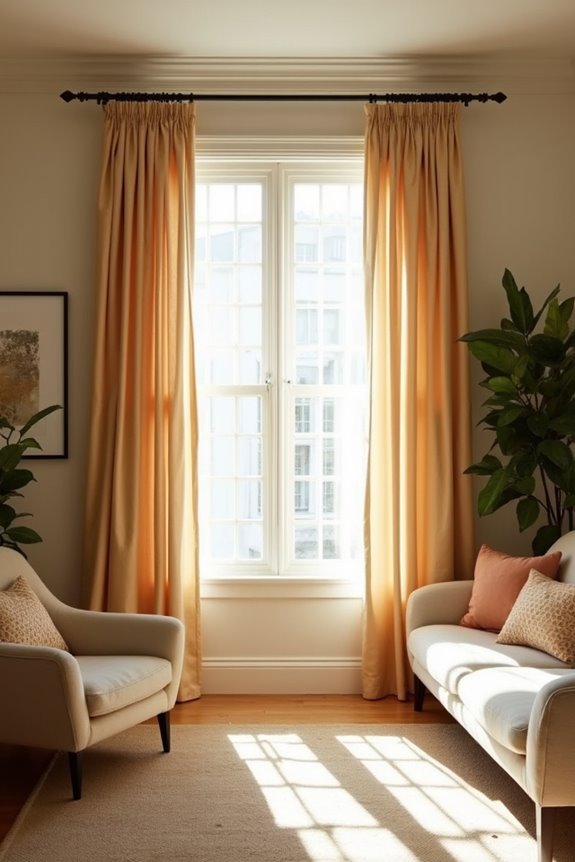
Now that you’ve nailed your measurements, it’s time to watch out for the slip-ups that can derail all that hard work.
The most common mistake? Choosing the wrong curtain length. Too-short curtains create a stubby, incomplete look that visually shrinks your window. On the flip side, puddling or touch the floor works beautifully in formal spaces, but float-length (just ½–1 inch above the floor) suits active rooms better—it reduces dust and wear.
Curtain rod placement matters more than you’d think. Hanging rods too low or close to the sill makes windows appear smaller. Position yours 4–6 inches above the frame instead.
Pay attention to practical details as well. Account for baseboards and heaters so curtains don’t drag improperly or block warmth. Finally, match your hardware to your room style—ornate wrought iron looks odd in minimalist spaces.
Break Length: Why It Works for Most Rooms
- You measure from rod down to the floor, then add just 1–2 inches
- Your fabric gently grazes the floor instead of puddling
- You get a polished look without daily snagging or dragging
This window treatment works because it balances room aesthetics with real-world living. Your floor grazing drapery hides uneven surfaces while staying functional. Unlike fabric puddling risk, break length gives you that elongated, refined appearance without complications.
I recommend this curtain length across bedrooms, living rooms, and dining areas. It’s the reliable choice that keeps your rod height investment looking intentional and sophisticated.
Before You Order: Your Curtain Length Checklist
I’ve learned that careful planning happens before you order—when you measure twice and think about how your fabric will actually behave once it’s hanging. You’ll want to measure from your rod down to the floor, making sure you account for rings, grommets, or tabs, since they add real inches to your final length. Then, here’s the trick: consider whether your fabric tends to stretch or shift, because some materials settle differently than others, and that’ll affect whether you need to adjust your measurement up or down.
Measure Your Rod Placement
Before you order a single panel, here’s the truth: your curtain length depends entirely on where you hang your rod.
I’ll walk you through curtain rod placement so you nail this critical first step. Start by deciding your above-window height—typically 8–10 inches above the window frame works well for most rooms. This height creates a polished, intentional appearance.
Next, measure straight down from your rod to the floor. This rod-to-floor measurement becomes your foundation for all three curtain length styles:
- Floating length: subtract ½ inch (hovering just above)
- Break-length: add 1–2 inches (grazing the surface)
- Puddle-length: add 3–6 inches (pooling elegantly)
Consistent measurements across your space mean your curtains will hang cohesively, even when furniture or floor types vary.
Account For Fabric Behavior
What happens to your curtains after they’ve hung for a few months? Natural fabrics like linen and wool shift, and I want you ready for it. Here’s what I’ve learned: some fabrics shrink, making curtains shorter over time, while others stretch under gravity’s pull.
I recommend planning ahead with your curtain length. Choose a break length or puddle length that accommodates these changes, keeping your room looking intentional. If your fabric tends to shrink, order longer initially. If it stretches, a break length prevents uneven bottoms.
Don’t stress about perfection. Order generously, observe your curtains for a few weeks, then hem adjust as needed. This approach saves frustration and keeps your curtain hanging looking polished, not hastily done.