

An accent wall brings definition to your room when you anchor it to a natural focal point—like the wall behind your sofa or a space with architectural detail. Choose materials that match your room’s function: soft textures for bedrooms, moisture-resistant options for kitchens, bold colors for living rooms. Test colors with large boards under different lighting before committing. Then layer intentional art and decor that harmonizes with your palette, balancing scale so nothing overwhelms the space. Get the proportions right, and you’ll see how these five elements work together.
Choose the Right Wall: Where Focal Points Live
How do you pick which wall deserves the spotlight? Your accent wall should anchor the room’s visual balance. Look for natural focal points: the wall behind your sofa, a back wall, or spaces with architectural detail and built-in shelving. These spots naturally draw your eye.
Avoid walls crowded with doors, windows, or clutter—they’ll dilute your accent wall’s impact. Instead, choose surfaces that support your room’s strongest feature. This strategic choice creates cohesive pairing between your wall color and furnishings.
When you align your accent wall with existing architectural interest, you’re supporting room flow and visual hierarchy. The result? A space that feels organized and planned, not random.
Select Accent Wall Materials Based on Room Function
Once you’ve picked your wall, it’s time to think about what’ll actually cover it. Your wall material choice depends entirely on your room function.
Your wall material choice depends entirely on your room function—select wisely to create both beauty and practicality.
In a bedroom, consider soft, textured paint or wallpaper that creates a calming focal point. Kitchens and bathrooms need durable, moisture-resistant materials that withstand humidity. Living rooms offer flexibility—try bold color, shiplap, or stone veneer to highlight architectural details.
Consider your layout harmony too. A feature wall with texture draws eyes naturally, supporting your decor ideas without overwhelming the space. Choose materials that complement your existing furniture and architectural details.
The right wall material makes your accent wall functional and visually appealing, anchoring your entire room’s design with purpose and personality.
Test Your Accent Wall Color in Real Light
Why do paint colors look so different once you get them home? The answer’s simple: lighting changes everything.
I start with swatches to narrow my color family, then move to large boards for the real test. I paint 2×2 boards and shift them around my room at different times. Morning light hits differently than afternoon sun, and artificial lighting alters the mood entirely.
I watch how undertones reveal themselves under various lighting conditions. I place boards near my artwork to see how contrast and harmony develop. Then I capture objective photos—day and night—to compare the color’s true behavior.
This structured progression from swatches to large boards prevents surprises. When I finally paint, I’ve already seen how this color lives in my actual space.
Complement Your Wall With Intentional Art and Decor
Your artwork should harmonize with your color palette’s undertones—whether warm, cool, or neutral. Intentional placement creates a strong accent wall.
Here’s what I recommend:
- Select pieces that contrast or coordinate deliberately (think black-and-white prints on dark walls)
- Consider scale and placement above mantels or behind beds to enhance, not compete
- Test how art interacts under different lighting throughout the day
This cohesion between wall art and decor builds the sense of belonging you want. You’re not just decorating; you’re crafting a space that feels like yours, where every element supports the whole.
Balance Scale, Lighting, and Proportion to Avoid Regret
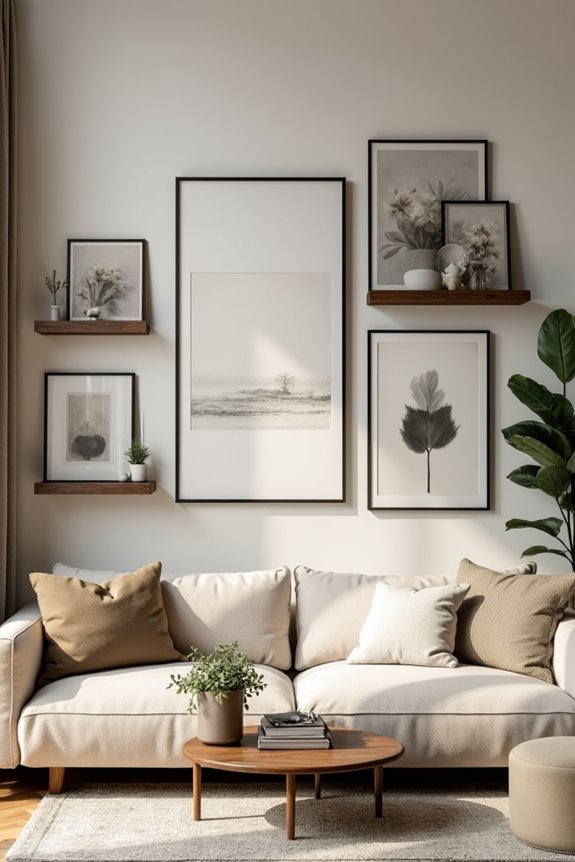
How do you know when an accent wall’s truly working in your space? You’ll feel it—everything looks intentional, not accidental.
I’ve learned that balance matters enormously. Your art size should be about two-thirds to three-quarters your wall’s width, giving you breathing room without crowding. This proportion prevents visual weight from overwhelming your room scale.
| Element | Small Room | Large Room |
|---|---|---|
| Art Size | 24-36″ wide | 48-60″ wide |
| Lighting | Sconces, picture lights | Track lighting, layered |
| Wall Color | Soft, grounding | Rich, anchoring |
Lighting changes everything. Strategic sconces and picture lights highlight your focal point without creating glare. Your wall color acts as your anchor, reducing visual noise when textures or patterns compete for attention.
The key? Make deliberate choices and remember—breathing room prevents regret.