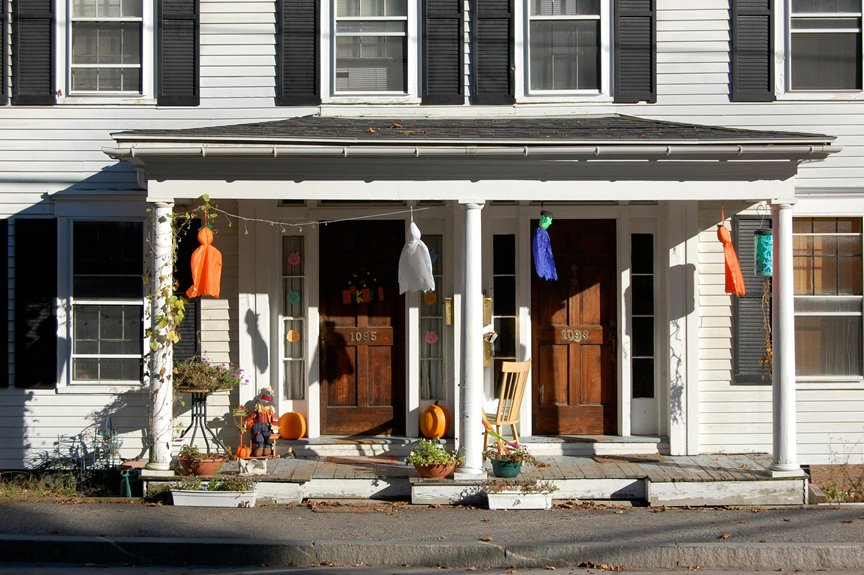
I’ve found that narrow porches benefit when you think in zones rather than one large space. Start by decluttering thoroughly—dust, sweep, replace that worn mat. Then position seating on one end with scaled-down furniture like rocking chairs, add a drinks station on the opposite end, and use rugs to visually separate zones. Hang plants and lighting overhead to draw attention upward, paint your door a sunny yellow, and select one bold color to unify the design. Understanding how these layers interact with each other creates a cohesive result.
Start With a Clean Slate to Maximize Visual Space
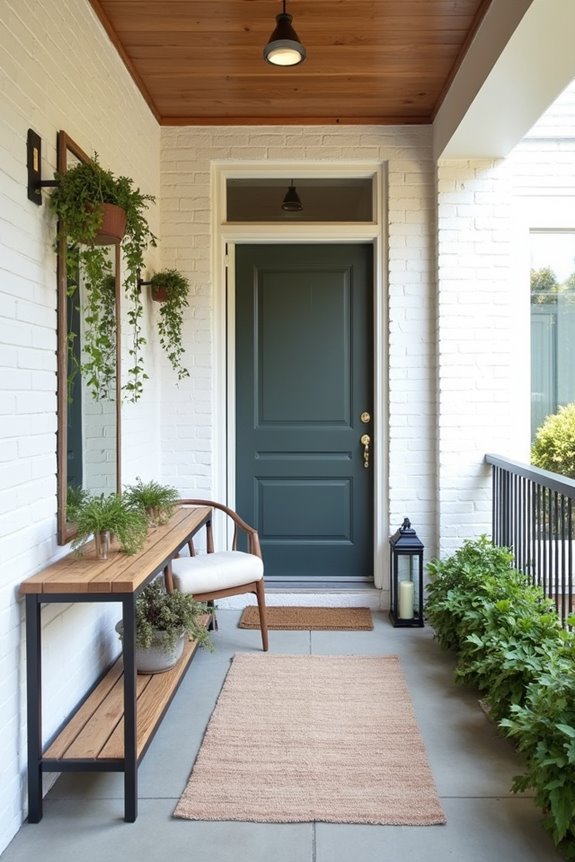
Why does a messy porch feel smaller than it actually is? Clutter steals space, making your small porch feel cramped and unwelcoming. I’ve learned that starting with a clean slate changes everything.
First, I dust fixtures and sweep away cobwebs. Then I clean the glass on doors and windows—you’ll notice how much brighter things look. I replace that worn welcome mat too.
Here’s the thing: tidiness is your foundation. When I remove unnecessary items, I create breathing room. My porch instantly feels larger and more inviting.
Now I keep only what serves a purpose. A simple seating area. A potted plant. Nothing more clutters my space.
This approach works because it lets your porch’s best features show. You’re creating a welcoming entry that represents who you are.
Create Multiple Intimate Zones in Your Limited Space
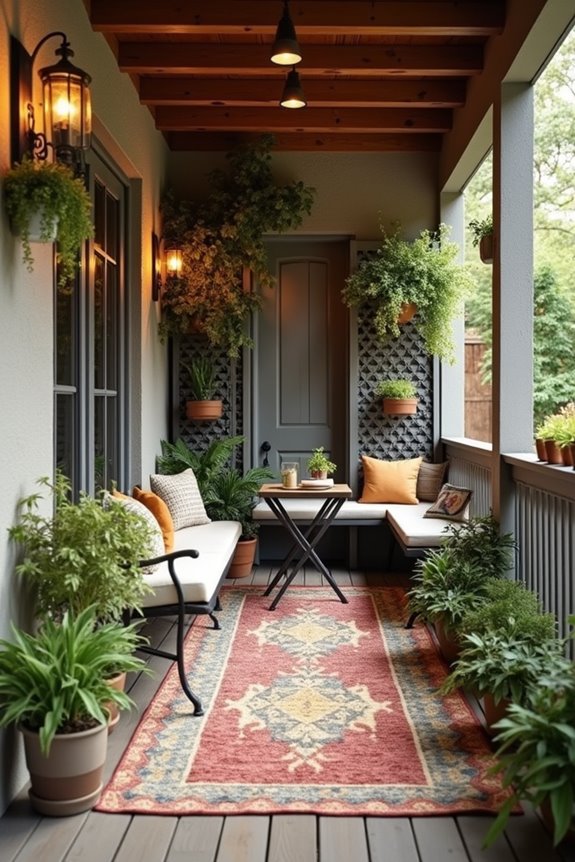
Instead of treating your narrow porch as one long, skinny room, think of it as multiple small zones—and that changes everything.
When you break your porch into distinct areas, you’ll feel like you’re in separate little gathering spots, not one cramped hallway. Here’s how to approach creating porch zones:
- Place a seating set (two rocking chairs with a small table) on one end
- Add a drinks station on the opposite side to define another zone
- Install a swing or daybed as your relaxation anchor
- Use a rug to visually divide spaces while keeping things open
Layer eclectic furniture instead of matching sets—it feels more welcoming. If your narrow porch allows, squeeze in a small café table for dining. These distinct zones make your tight space work better and give it purpose rather than feeling cramped.
Pick Furniture Sized for Your Tight Space
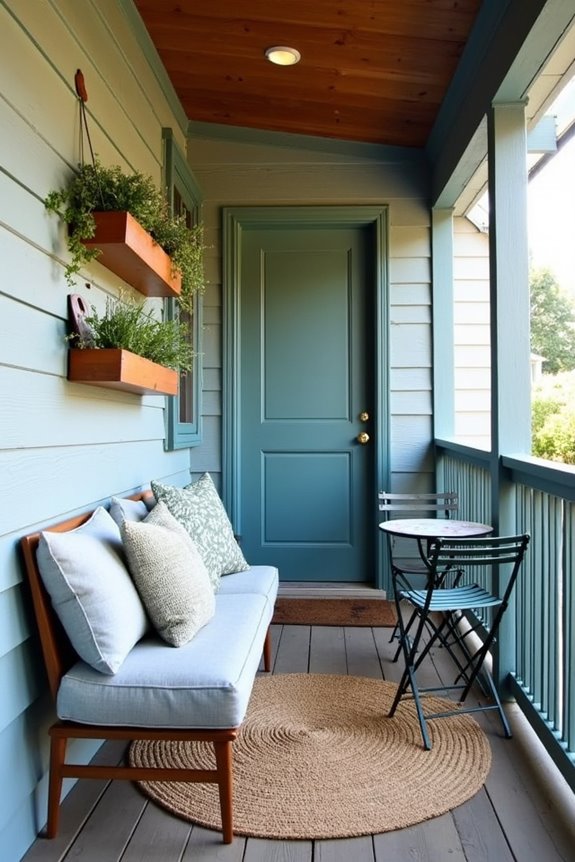
When you’re working with a narrow porch, scale matters—oversized furniture overwhelms your space and creates a cramped feeling. Instead, choose functional pieces like rocking chairs, slim accent tables, and benches that fit your actual footprint without consuming walkable room. Selecting smaller, multipurpose items over bulky sets keeps your porch open and usable, so you can enjoy the space you have.
Scale Matters for Narrow Spaces
There’s the thing about narrow porches: they’re not asking you to sacrifice comfort, just to get smart about sizing.
I’ve learned that scale matters tremendously in tight spaces. When I choose rocking chairs instead of bulky sectionals, I create breathing room. Here’s what works:
- Rocking chairs occupy minimal floor space while offering maximum coziness
- Accent tables provide function without dominating your porch
- Slim benches seat multiple people without overwhelming the width
- Wall-mounted shelves leverage vertical space instead of horizontal
Every piece I select serves a dual purpose: it’s both functional and visually light. I avoid oversized furniture that crowds the area and makes everything feel cramped. When each item fits the scale of your porch, you’ll notice how the space actually breathes. That’s when your narrow porch becomes deliberate and well-considered instead of cramped.
Functional Pieces Over Bulky Items
| Furniture Type | Why It Works |
|---|---|
| Storage benches | Seating plus hidden storage |
| Accent tables | Small footprint, big style |
| Hanging chairs | Clears floor space completely |
| Bistro sets | Compact dining solution |
Your space-saving porch decor works best when each piece does double duty. A small table holds drinks *and* plants. A storage bench gives you somewhere to sit *and* stash cushions. I skip the oversized pieces that take up unnecessary room. You’ll feel more connected to your porch when you can actually move through it freely.
Hang Lighting and Plants Above to Open Up Vertically
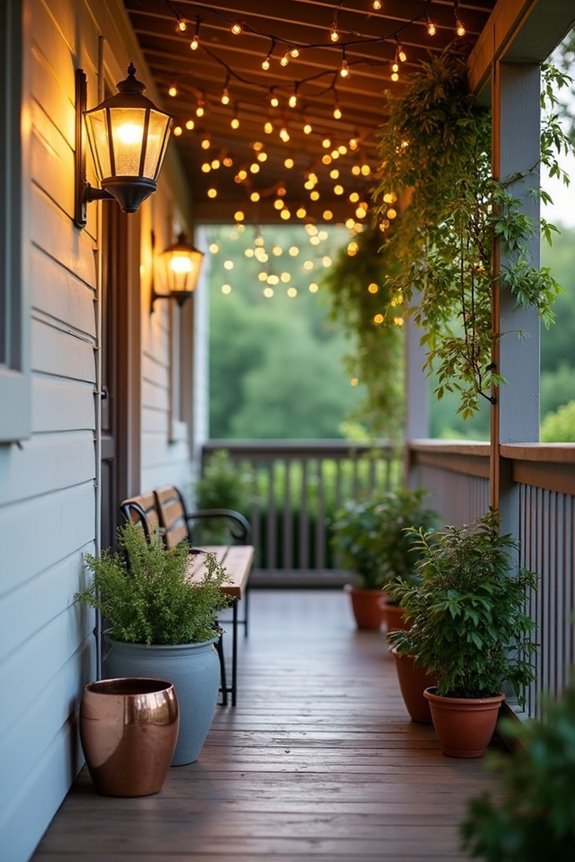
I’ve discovered that hanging your lighting and plants overhead works well for narrow porches, because it pulls your eyes up instead of down at the cramped floor below. When you install fixtures like chandeliers or pendant lights above, paired with trailing greenery on wall planters and trellises, you’re creating height and visual interest without eating up any of that precious ground space. This vertical approach lets you fill your porch with personality and greenery while keeping the pathway clear for actually walking through.
Maximizing Vertical Porch Space
When you’ve got a narrow porch, the best real estate you’ve got is straight up. Looking upward makes use of small porch limitations by creating opportunities. By using vertical space smartly, you’ll create an inviting entrance without cluttering your floor.
Here’s what I recommend:
- Hang pendant lights or chandeliers above seating areas to brighten your porch while keeping floors clear
- Install wall-mounted planters along railings to add greenery without crowding walkways
- Choose hanging chairs that draw eyes upward and maximize usable width below
- Use tall plant stands or multi-tier shelves to create layered green backdrops without horizontal mess
Pairing a hanging pendant with a single vertical plant keeps things airy and open. You’re building a welcoming space that feels bigger than it actually is.
Strategic Hanging Fixture Placement
How do you make a narrow porch feel wider and taller at the same time? You draw the eye upward with hanging fixtures.
I’ve found that ceiling-mounted lights and suspended planters work well—they free up your floor space while making your porch feel more open. Pendant lights are particularly effective. They pull your gaze upward, creating immediate height.
Here’s what I recommend:
- Hang lightweight, weather-resistant pieces like woven baskets or slender lanterns
- Pair vertical greenery with overhead lighting to guide visitors toward your door
- Choose fixtures that won’t crowd your narrow space
When you use vertical space strategically, you’re not just decorating—you’re reshaping how your porch feels. The result? A welcoming entryway that feels spacious and deliberate.
Overhead Greenery and Lighting
Now let’s build on that vertical strategy by bringing overhead greenery and lighting into the mix. I’ve found that hanging plants and lights make narrow porches feel wider and more open by drawing the eye upward.
Here’s what I recommend:
- Hang lightweight planters with trailing vines that soften your ceiling without weighing it down
- Install pendant lights or string lights for ambient glow that doesn’t crowd your floor
- Add hanging wreaths on high hooks to personalize your entry while keeping walkways clear
- Choose swooping greenery that creates visual interest overhead
When overhead greenery and lighting work together, your narrow porch feels less cramped. You’re using space smartly, creating an inviting entry that welcomes visitors while keeping everything accessible. It’s practical decorating that actually works.
Layer Rugs and Textiles to Define Each Zone
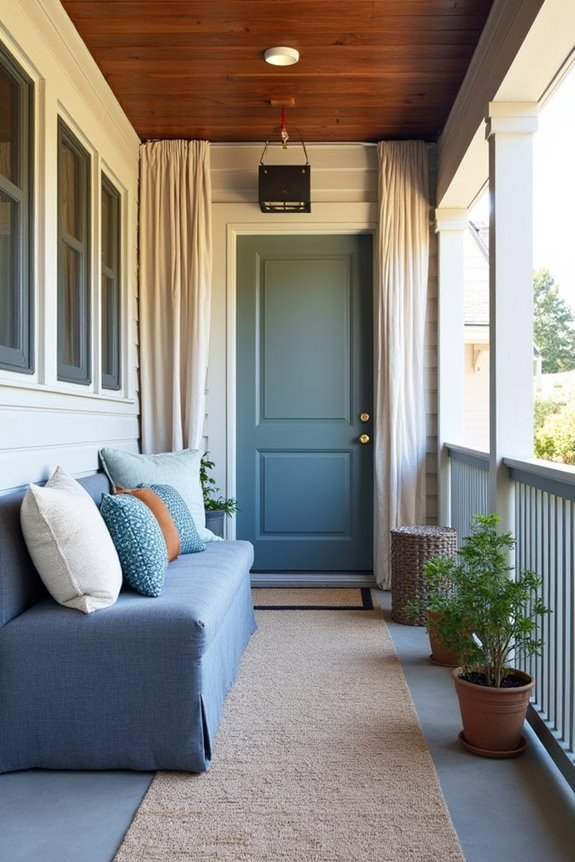
Why do narrow porches feel cramped when they’re actually just tight on space? Layering rugs helps create distinct zones without crowding things.
Here’s what works: I place a textured area rug under my seating group to anchor the conversation area. Then I add a smaller runner near my dining or beverage station. This rug zoning tells visitors where to sit, where to linger, and where to grab drinks.
I mix textures too—flat-weave, jute, outdoor-safe patterns—so the floor stays visually interesting. I choose rug colors that coordinate with my cushions and planters, reinforcing each zone’s purpose while keeping everything cohesive.
Layered rugs help narrow porches feel organized and welcoming.
Use Lighting to Define Where Each Zone Begins and Ends
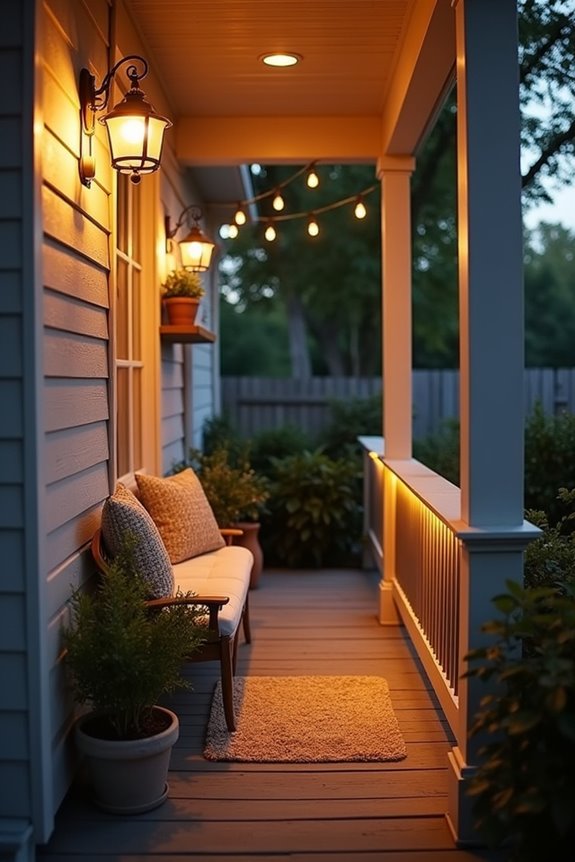
Just as rugs anchor your seating and dining areas, lighting creates invisible borders that tell visitors exactly where each zone lives on your narrow porch.
Strategic lighting shapes how people experience your space. Here’s what works:
Strategic lighting shapes how people experience your space, creating invisible borders that organize and define each zone.
- Highlight your front door with a bright fixture that draws attention and guides guests toward entry
- Use hanging fixtures like string lights or lanterns to mark zone transitions and add dimension
- Place uplighting around planters to separate seating areas without taking up floor space
- Choose warm tones that complement your door’s color and create cohesive zone perception
When you layer these lighting choices, you’re not just brightening your porch—you’re building an organized atmosphere where each zone serves a clear purpose. Your visitors will instinctively know where to go.
Style Your Front Door as the Porch’s Main Event
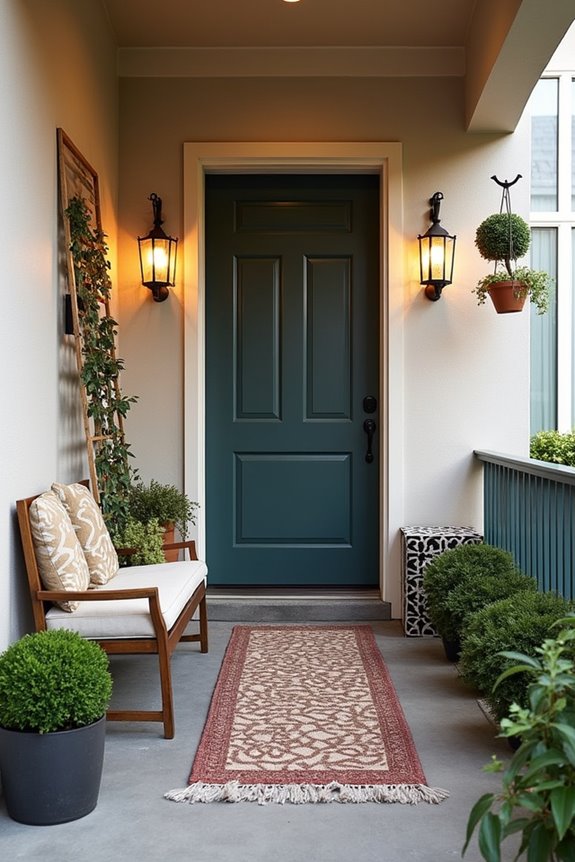
Your front door is already the star of your porch—it’s where everyone’s eyes land first, and it’s the gateway to your home. I’d make it work hard for you by painting it a sunny yellow that bounces light and energy onto your narrow space. This color truly shines on west-facing porches, countering hot afternoon sun while building curb presence.
Layer your porch decor strategically. Hang a seasonal wreath on the door, then add a decorative doormat with a rustic plaid bottom mat underneath. These touches create a welcoming entry without eating up square footage.
Switch your front door styling seasonally—think mums and plaid accents for fall. This keeps your porch decor feeling fresh and considered without overwhelming your tight layout.
Choose Vintage and Built-In Pieces for Function Without Clutter
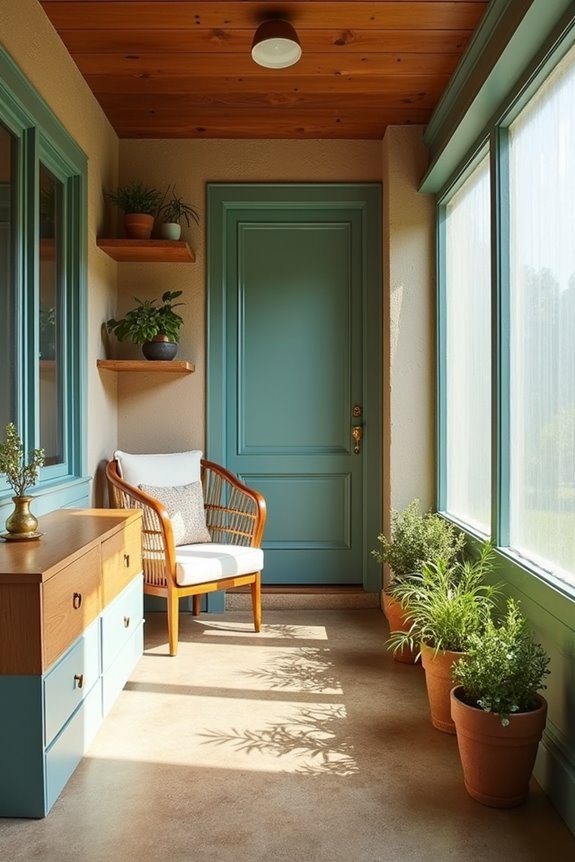
When you’re working with a narrow porch, bulky modern furniture can swallow up your precious space faster than you’d think. That’s where vintage furniture comes in—it’s smaller, smarter, and built to fit tight layouts.
I’ve found that mixing vintage seating with built-in storage improves how my porch functions. Here’s what works:
- Refurbished metal chairs that don’t take up much room
- Small bar carts for drinks and décor
- Sideboards that provide storage and style
- Benches with built-in storage underneath
The Tulip Retro Outdoor two-piece armchair set in dark red keeps things compact, while a 3-piece Marcytop Bistro Set gives you seating plus a round table without crowding your space. Your porch decor becomes both beautiful and practical—no clutter, just smart choices.
Use Plants and One Bold Color to Tie Zones Together
Now that you’ve got the furniture sorted, it’s time to add life to your narrow porch—and I mean that literally.
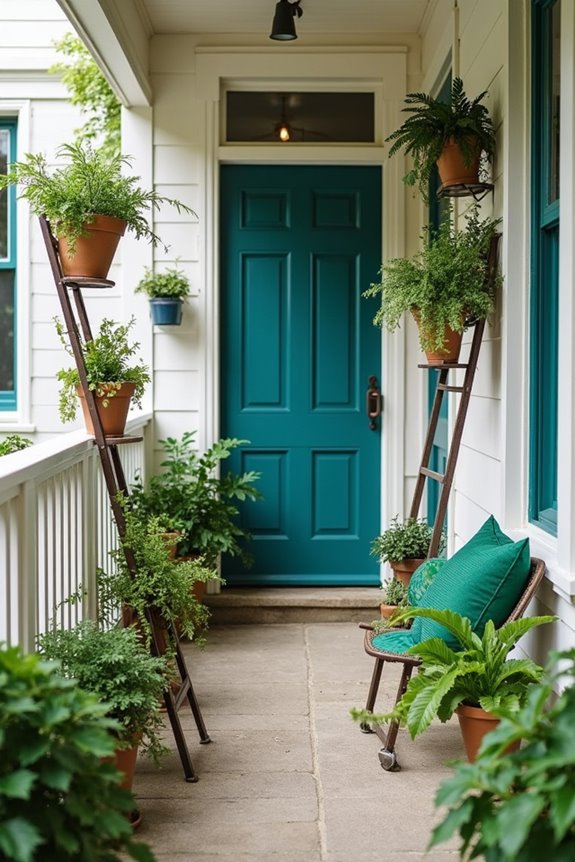
Plants bring immediate visual interest to your porch. I hang baskets from the ceiling and mount planters on walls to save precious floor space. Here’s what works: choose one bold color—yellow cushions, a bright door, vibrant accents—that pulls everything together visually.
Your color scheme becomes your anchor. Pair that standout hue with greenery and black furniture for a unified look that feels deliberate rather than random. Place a focal planting near each seating zone to define separate areas without blocking the walkway.
Rotate seasonal plants and cushions to keep things fresh. This simple approach maintains interest while your coordinated color palette stays strong. You’re creating zones that invite people in, not overwhelm them.
Arrange Your Zones: Layout Examples for Different Sizes
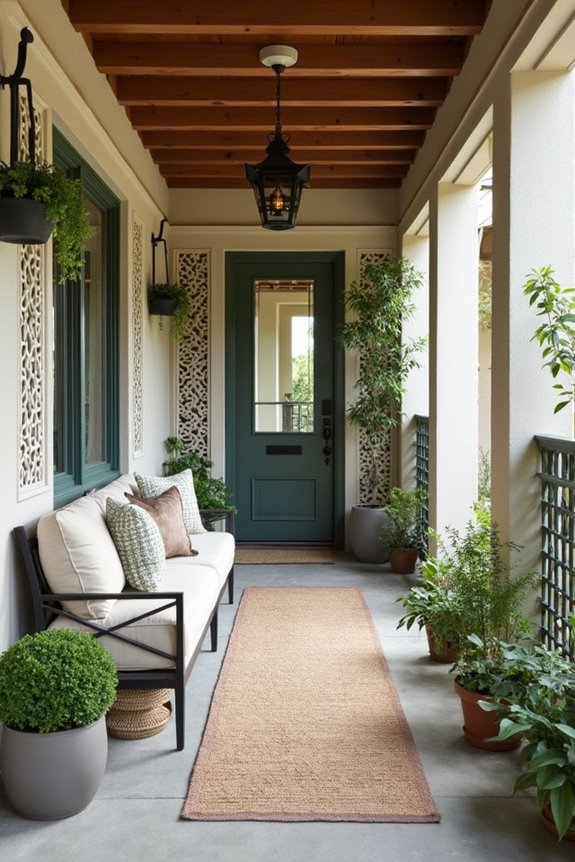
How do you fit a living room, dining room, and lounge into a strip of concrete? Breaking your porch decor into distinct zones helps organize the space effectively. Your layout ideas depend on your space, so here’s what works for different widths.
Breaking your porch decor into distinct zones helps organize the space effectively and fit multiple living areas into narrow spaces.
For narrow porches, consider these zone arrangements:
- Seating zone near the door – a single chair or small loveseat anchors the entry
- Focal feature in the middle – a swing or daybed creates visual interest
- Drinks station at the far end – a side table holds beverages and decor
- Storage bench along one side – maximizes function without blocking the walkway
Mix eclectic pieces rather than matching sets. This approach prevents crowding while keeping sightlines open throughout your narrow space.