A quality porch boosts your home’s value—I’ve seen it happen when homeowners invest in solid materials, professional design, and proper permits.
You’re looking at 50–84% ROI depending on your region and climate, though warm areas typically see bigger gains than cold ones.
Open porches run $5,000–$10,000, while screened versions hit $15,000–$25,000.
The key? Skip the shortcuts. Unpermitted work kills resale appeal.
Keep reading to discover exactly which porch style matches your neighborhood and maximizes your investment.
Does a Porch Add Value to Your Home?
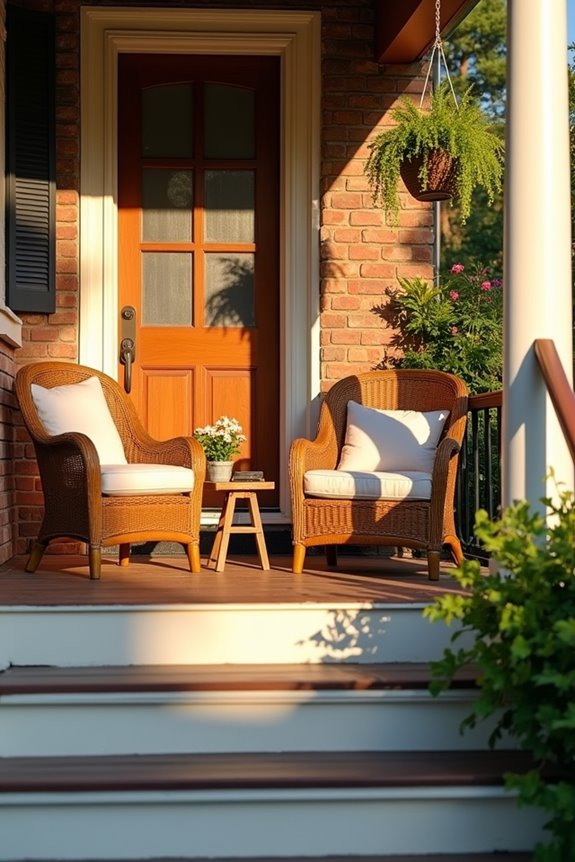
How much could a front porch actually boost your home’s worth? A well-designed porch increases value and improves how your home looks from the street. The key is getting the ROI right.
Here’s what matters: professional design-build quality, durable materials, and everyday functionality. Porches aligned with regional climate and architectural style—like screened or wraparound designs—consistently outperform basic covered versions.
Don’t skip permits, though. I know they feel tedious, but unpermitted porches actually undermine value gains. That’s backwards from what you want.
The real win? Your porch becomes a living space extension. Buyers notice. They imagine themselves there. That emotional connection translates directly to your home’s worth, making the investment worthwhile.
How Region and Climate Affect Porch Value
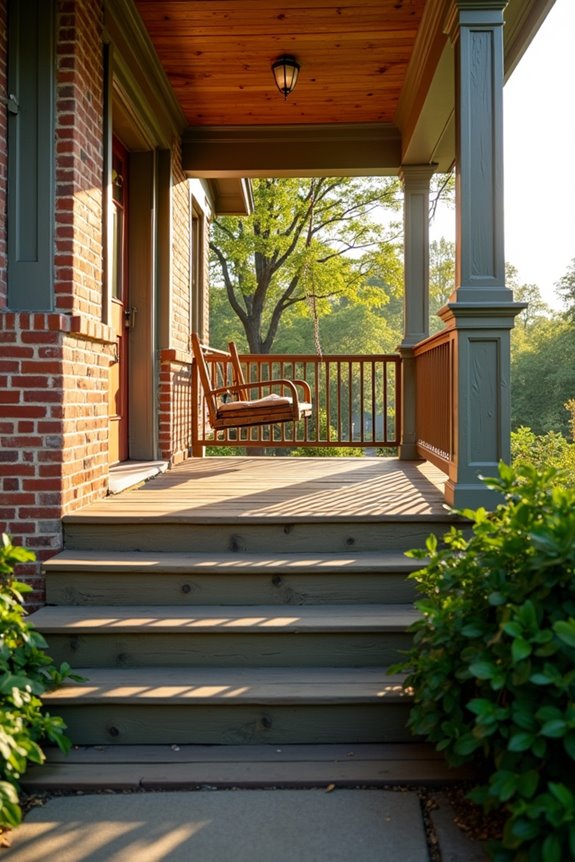
Where you live dramatically shapes how much your porch matters to buyers, since a shaded wraparound porch in the scorching South appeals differently than a front stoop in snowy Minnesota. Your region’s climate and outdoor culture determine whether that porch gets used year-round or sits empty half the year, which directly affects what buyers will pay for it. Understanding your porch’s real value depends on evaluating your specific location and climate.
Climate’s Impact On Value
Where you live makes a real difference in what your porch is actually worth. Climate impact shapes porch value dramatically across regions. In the warm South, grand wraparound porches boost curb appeal and outdoor living appeal—homebuyers expect them. Meanwhile, Pacific Northwest buyers value rain-ready covered spaces differently. Three-season porches work well in mild climates, extending usable months and ROI considerably. However, extreme cold or heavy snow reduces value gains since porches sit unused longer. Regional trends matter too; your porch’s worth depends on matching local architectural styles and climate-adapted features. Weather durability becomes critical—invest in resistant materials where precipitation or intense sun exposure threatens longevity. Align your porch design with neighborhood expectations, and you’ll maximize resale returns based on your specific climate zone.
Regional Lifestyle Expectations Matter
One thing successful porch owners understand is this: what works in Charleston won’t necessarily work in Seattle.
Your regional lifestyle shapes porch value dramatically. I’ve learned that outdoor living culture drives resale value in warm climates, while snowy regions see different returns. Here’s what matters in your area:
- Local market expectations for porches as standard features
- Climate suitability for year-round outdoor use
- Architectural norms that define your neighborhood’s appearance
- How residents actually spend time outside
When your porch aligns with regional norms and lifestyle expectations, buyers notice immediately. A wraparound porch in South Carolina feels necessary. That same design in Minnesota might confuse buyers shoveling snow regularly.
I’d encourage you to study homes selling well in your market. Notice their porches. Match those patterns, and you’ll maximize both appeal and resale value.
Seasonal Usability And ROI
Because your porch sits outside year-round, climate determines how often you’ll actually use it—and that directly impacts what buyers will pay.
In warm regions, a basic covered porch delivers solid ROI since you’re using it most months. But in snowy climates? That same porch sits empty half the year, which buyers notice.
Three-season rooms and screened porches change the equation. They extend your outdoor living season dramatically, boosting both usability and value. I’ve seen homes with these additions command stronger resale prices because they feel like genuine living space, not seasonal afterthoughts.
Durability matters too. Choose materials built to withstand your climate—composite decking handles moisture and sun without constant maintenance. When your porch integrates into how you actually live, that integration shows buyers real value they’ll pay for.
Porch Types and Their Cost Range
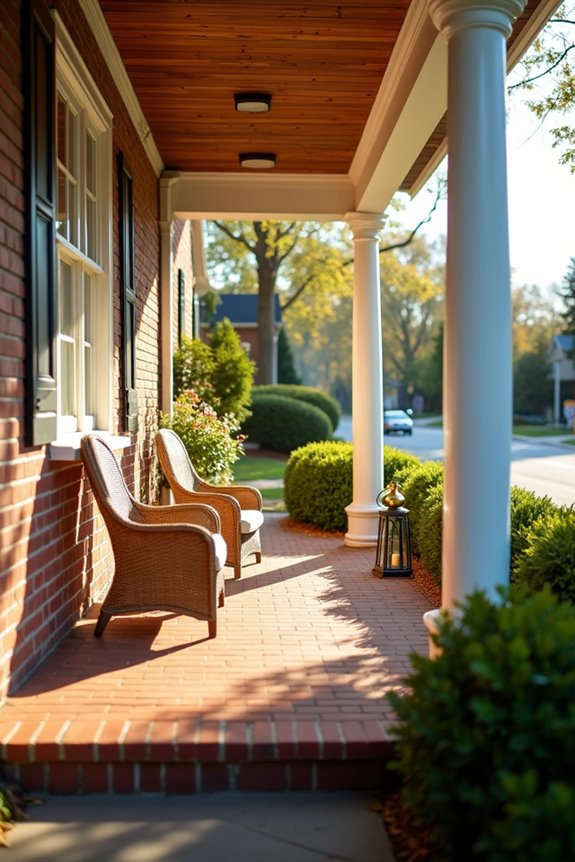
When you’re thinking about adding a front porch, you’ve got real choices to make—and honestly, your budget will play a huge role in what’s actually possible.
Different porch types come with different price tags. Here’s what works best:
- Open porches start around $5,000-$10,000 and give you that classic roofed look
- Screened porches cost more but keep bugs out while you enjoy fresh air
- Wraparound porches run $30,000-$50,000 since they’re extensive structures
- Luxury options with stone floors and premium materials push above $75,000
Your material choices matter too—pressure-treated wood, composite decking, and stone each affect your wallet differently. The good news? Well-designed porches generally boost your home’s ROI more than poorly executed ones. Choose what fits your budget and lifestyle, and you’re making a smart investment.
What a Quality Porch Installation Costs
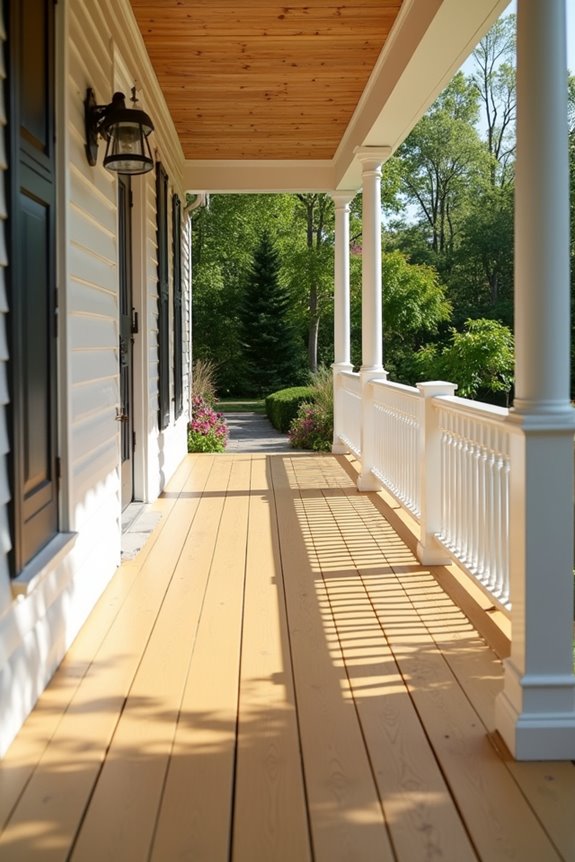
I’ll walk you through the real costs you’re looking at, because knowing what separates a budget porch from a quality one matters when you’re planning your investment. Your basic front porch runs $5,000 to $10,000, but here’s where it gets interesting: the materials you choose—pressure-treated wood versus composite decking or stone—can push that price all the way to $30,000, $50,000, or beyond for something built to last. Understanding these price tiers helps you match your budget to the durability and value you actually want.
Cost Range By Porch Type
- Open porch: $5,000–$10,000 for basic designs
- Screened porch: $15,000–$25,000 with enclosed protection
- Wraparound porch: $20,000–$40,000 for expanded coverage
- Luxury features: $75,000+ with premium materials and finishes
Your cost range shifts based on materials too. Pressure-treated wood keeps expenses lower, while composite decking or stone floors increase prices. I’d recommend getting multiple quotes because permits, labor, and HOA approvals add hidden costs. Understanding these porch type differences helps you budget accurately and choose what works for your home and financial situation.
Material Choices Impact Investment
Why does one porch last decades while another falls apart in five years? Your material choice determines everything.
I’ve learned that pressure-treated wood offers affordability, but requires consistent maintenance. Composite decking costs more upfront yet demands far less upkeep—a genuine trade-off worth considering. Outdoor plank tile sits at the premium end, delivering superior durability and aesthetics that noticeably boost your ROI.
The reality? Durable materials reduce long-term maintenance headaches. A well-constructed porch using quality materials supports higher resale value than poorly built alternatives. You’re not just buying initial cost savings; you’re investing in years of reliable performance.
Choose wisely, and your porch becomes an asset that pays dividends.
Materials and Installation: Where Your Porch Budget Pays Off
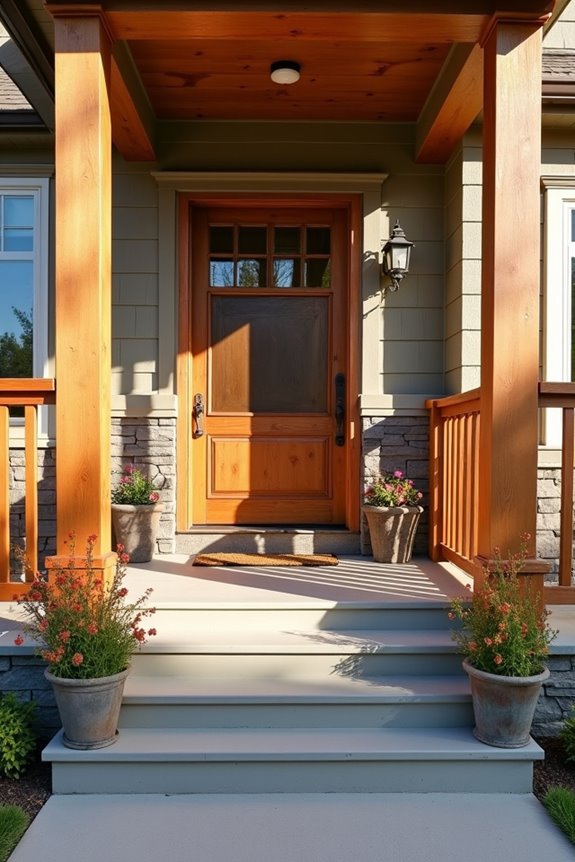
When you’re ready to build or upgrade your front porch, here’s the truth: what you spend on materials and installation now directly shapes how much value you’ll get back later.
I’ve learned that smart material choices matter enormously for porch value. You’ll want to consider:
- Composite decking – costs more upfront but resists rot and cuts maintenance dramatically
- Pressure-treated wood – budget-friendly yet needs regular upkeep
- Outdoor plank tile – premium option with solid ROI potential
- Professional design-build firms – yield better durability and design integration than DIY
Strong installation matters just as much. Reinforce your framing, check footings, and confirm solid connections. When materials and installation work together, your porch lasts longer, protects your investment, and adds real value to your home.
Permits, Property Taxes, and Hidden Costs
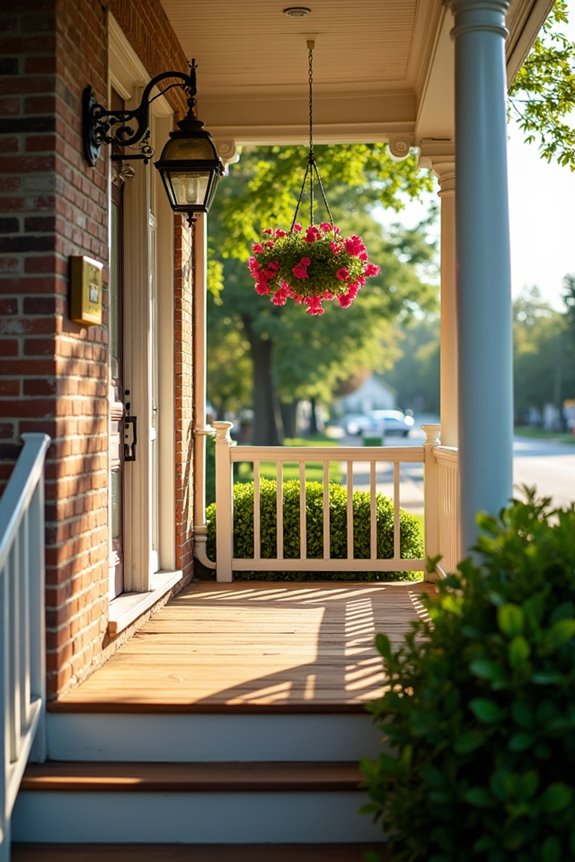
you can pour money into a beautiful porch, only to hit surprise fees and delays that eat into your return.
In Charlotte, permits aren’t optional—they’re required. Roof and structural changes require them, and HOA approvals add more gatekeeping. I’ve seen projects stall for months while waiting for compliance sign-offs. That’s why I recommend getting a professional design-build plan upfront that explicitly covers permits, timelines, and HOA requirements.
Then there’s property taxes. Some localities levy them on new porches, which limits your ROI, especially in high-value neighborhoods. Skip proper permits, and you risk fines that completely negate your gains.
Start early. Contact your HOA and local building department before breaking ground. You’ll avoid delays, maintain code compliance, and protect your investment long-term.
Design Your Porch to Match Your Home’s Architecture
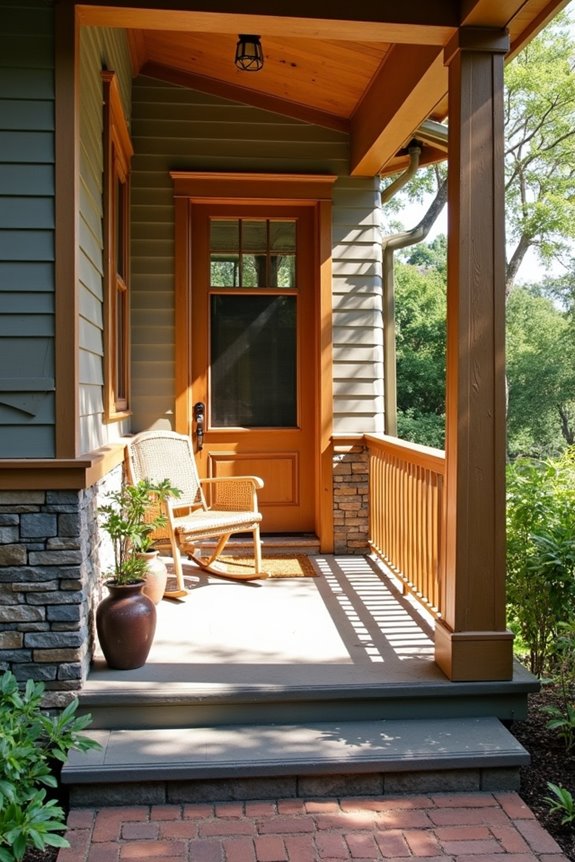
What I focus on for a cohesive exterior:
- Match your materials—brick, siding, stone—to your home’s existing palette
- Mirror your home’s architectural period, whether Victorian, traditional, or contemporary
- Coordinate trim, railings, and columns with surrounding details
- Integrate your front door styling into the overall design
When you align these elements thoughtfully, your porch works as part of your home’s design. A well-integrated front door makes a real difference in how your home reads from the street. Work with a professional designer if you’re unsure—they’ll make sure rooflines and finishes work together properly.
Your porch isn’t an addition; it’s a homecoming.
The ROI Question: When a Porch Pays Back Its Cost
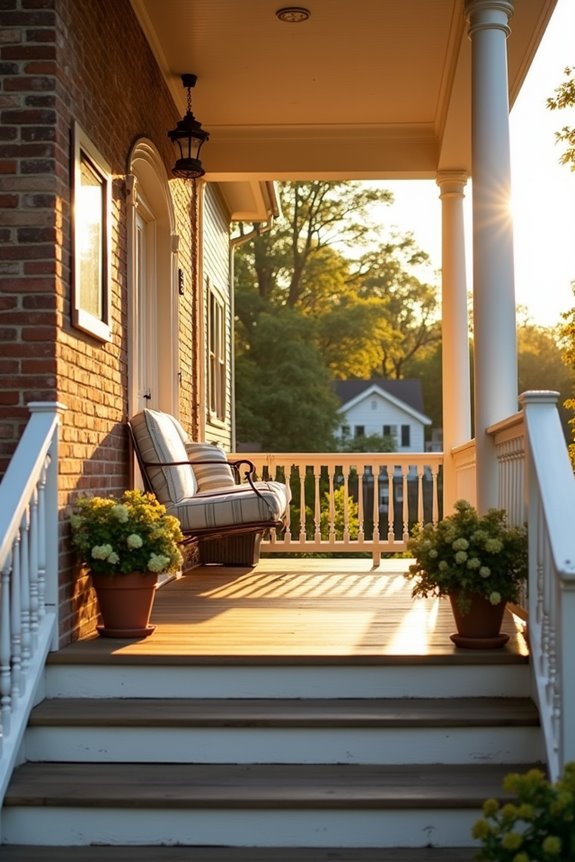
A beautiful porch that matches your home’s style is valuable, but let’s talk about what matters to your wallet—does it actually pay back what you spend?
Here’s the honest truth: your porch ROI typically ranges from 50% to 84%, depending on where you live. A professionally designed three-season porch outperforms basic covered versions because it extends your outdoor living space longer. Warmer climates see higher value increases, while colder regions lag behind.
| Factor | Impact |
|---|---|
| Three-season porch | Higher ROI |
| Basic covered porch | Lower returns |
| Professional design | Better resale value |
| Permits, HOA approvals | Protects investment |
| Durable materials | Increases longevity |
Getting permits and HOA approvals upfront prevents costly problems later. Your return on investment grows when you build with care and quality in mind.