
Decorate Your Fireplace Mantel With 7 Essential Techniques
Start by clearing everything off your fireplace mantel, then choose one strong focal point—either a mirror or artwork—to anchor your design. Layer in different textures and heights using books, greenery, and objects you love. Balance heavier pieces with lighter neighbors, and leave about 30-40% of your mantel empty for breathing room. This restraint creates sophistication, not emptiness. Follow these seven techniques, and you’ll have a well-decorated mantel that makes every inch count.
Diagnose Your Mantel: Over-Decorated, Under-Decorated, or Just Right?
How’s your mantel looking right now?
How’s your mantel looking right now? Find the sweet spot between visual chaos and sparse emptiness with intentional, balanced styling.
I find most mantels fall into one of two camps. Over-decorating creates visual chaos—too many items fighting for attention. You’ll feel overwhelmed when you look at it. Instead, I recommend being selective, mixing textures, and leaving open space. Choose fewer pieces in a matching color palette.
Under-decorating leaves your mantel sparse and empty. It lacks a focal point that draws your eye. I suggest anchoring it with something large—a mirror or art piece—then arranging smaller items around it for balance.
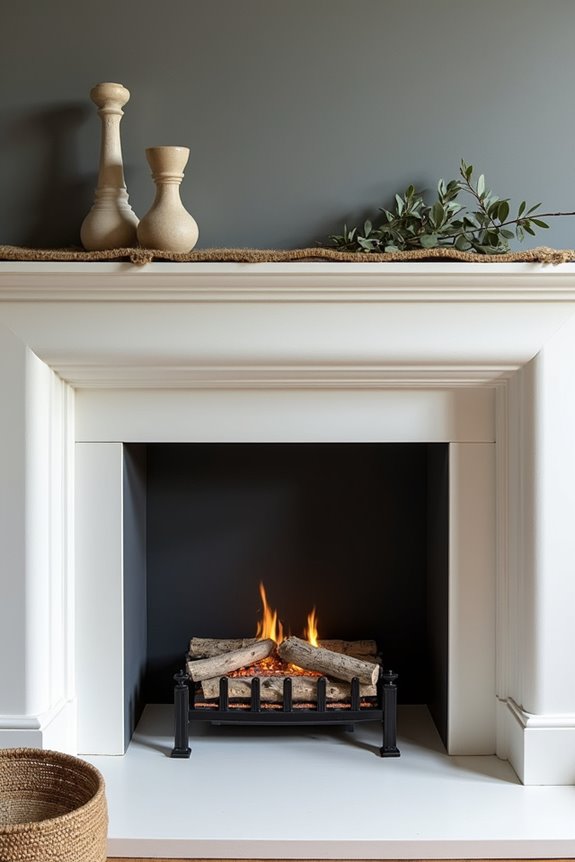
The sweet spot? You’ve got breathing room, deliberate pieces, and clear visual interest. Your mantel should feel organized, not cluttered or bare. Does yours reflect that balance?
Start Fresh: Remove Everything and Assess Your Space
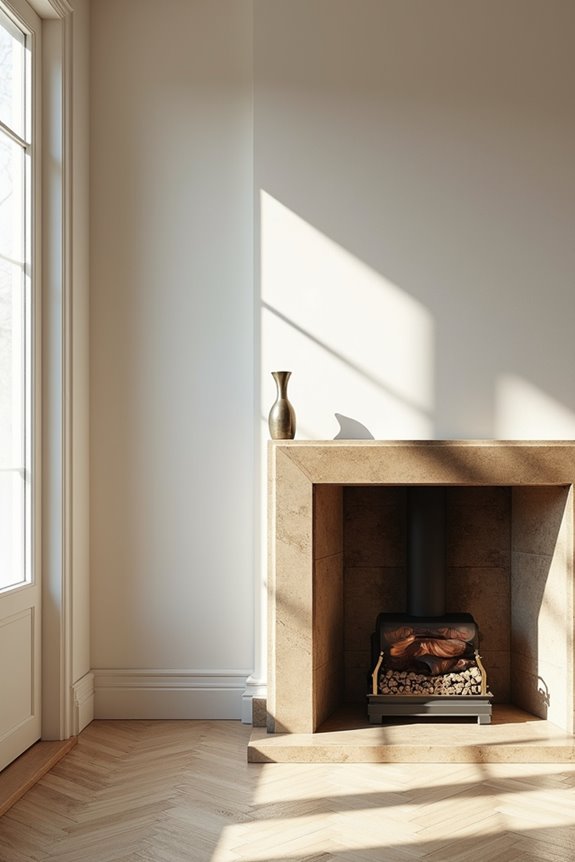
I’m going to ask you to do something that might feel counterintuitive: take everything off your mantel right now. Once you’ve cleared it completely, step back and really look at what you’re working with—notice the width, the height, and those architectural details that’ll become your design anchors. This clean slate gives you a foundation for making deliberate choices about color, texture, and arrangement that actually work together.
Clear The Clutter Completely
Why does a mantel often become a catch-all for everything we own? We’re busy, and that shelf seems convenient. But here’s the truth: clearing it completely changes how you use the space.
Remove every single item from your mantel. Yes, all of it. This mantel decluttering step matters because it gives you a blank slate—a clean canvas to work with.
Once it’s empty, dust the surface thoroughly. Look at what you’re working with. Notice the width, height, and any space limitations around it.
This space assessment reveals what’ll actually work. You’ll see where a TV might interfere or how architectural details affect placement. With this foundation clear, you’re ready to build something deliberate.
That empty mantel isn’t bare—it’s full of possibility.
Evaluate Your Fireplace’s Bones
Look at your room’s existing color palette and textures. What materials dominate? Warm woods, cool metals, soft fabrics? Your mantel assessment should identify these elements so your styling works with what you have.
Check for symmetry in your fireplace design. Does it have a TV above it? Built-in shelving nearby? These constraints actually help you create a stronger visual anchor.
You’re not decorating in a vacuum. You’re designing a display that belongs with everything else in your room.
Plan Your Design Strategy
Now assess your space. Notice how the mantel draws your eye upward? That’s your vertical anchor point. Consider what size mirror or artwork might work with the display.
Next, gather items you love and identify a cohesive color palette. This creates harmony as you layer pieces later. Start with symmetry—it feels balanced and grounded. Once your symmetrical base is set, you can add asymmetrical touches for personality.
This thoughtful design strategy keeps your mantel organized and purposeful.
Choose Your Focal Point: Mirror or Artwork
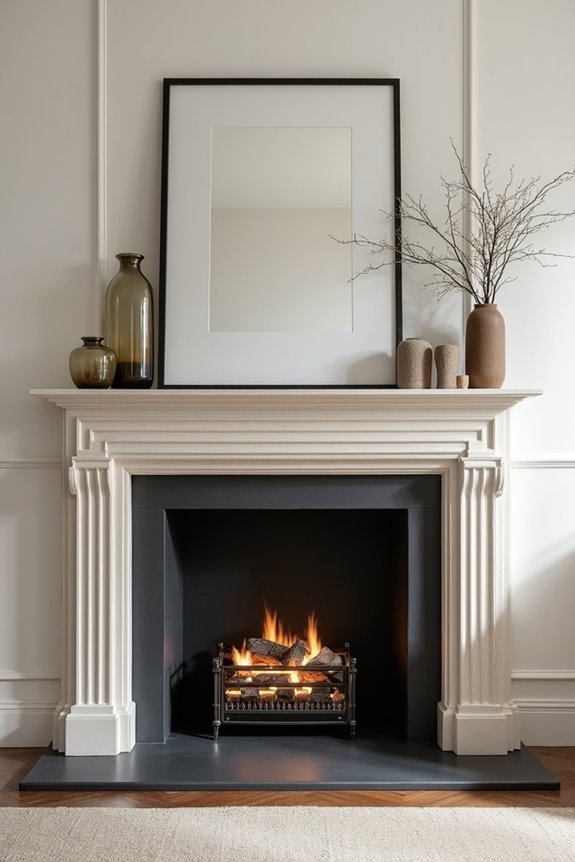
When you’re decorating your mantel, the first thing I’d suggest is picking one strong focal point—either a mirror or a piece of artwork.
Here’s why this matters: a mantel focal point anchors your whole design, drawing eyes upward and creating visual interest. You’re building a space that works well together, not scattered.
A mantel focal point anchors your design, drawing eyes upward and creating visual interest in a cohesive space.
Mirror or Artwork? Consider:
- A mirror above mantel expands perceived space and reflects light well
- Artwork proportion should match your mantel’s width for balanced scale
- Layered decor behind your focal piece adds depth
- Symmetrical arrangement establishes formal balance you can adjust later
Start with a strong centerpiece. Whether you choose a mirror’s reflective quality or artwork’s personality, you’re creating an anchor point that makes your fireplace work for your home.
Add Height and Dimension by Layering Pieces
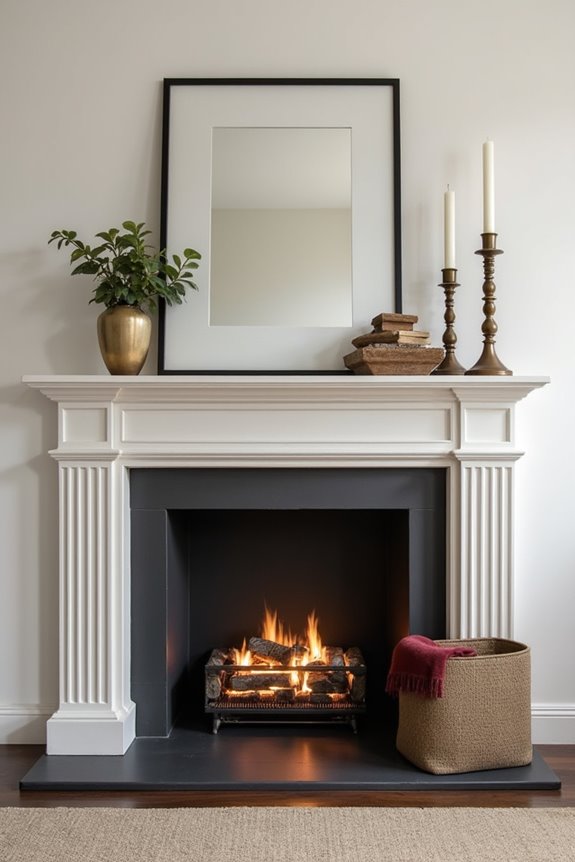
Your focal point is just the beginning—here’s where layering adds depth and dimension to a flat mantel. Use books and boxes to create different heights, then arrange smaller pieces in front and to the sides. This approach gives your mantel visual depth that draws attention.
Mix textures like wood, ceramic, and metal—they work together well. Alternate round shapes with angular ones; this contrast keeps things interesting without looking cluttered. Add greenery or florals at varying heights to soften the arrangement and bring life to your mantel decor.
The key? Leave breathing room. Don’t crowd the top edge with too many small items. Each layer should stand out clearly, creating a composed look that draws people in.
Balance Scale and Weight With Asymmetrical Arrangements
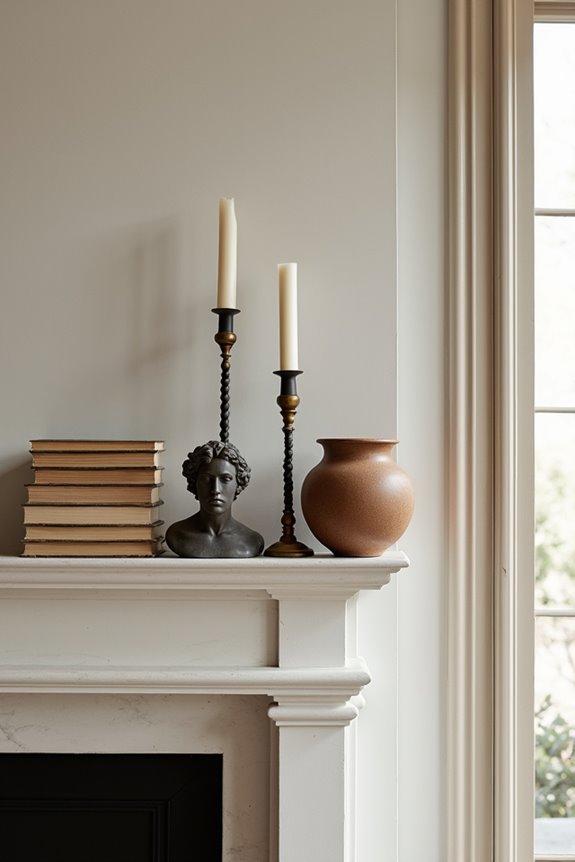
While symmetry feels safe, asymmetry is what makes a mantel actually interesting. I’ve learned that the trick isn’t abandoning balance—it’s building it differently. Start with paired anchoring items on each end, then break the rules from there.
Asymmetry makes a mantel interesting. Balance differently by anchoring paired items, then breaking the rules from there.
Here’s how I create that lived-in quality:
- Position your focal piece (a mirror or artwork) slightly off-center to draw eyes upward
- Layer objects with varying height variations, mixing tall textured pieces with shorter accents
- Use asymmetry to anchor visual weight, placing heavier items strategically
- Add greenery or natural elements to soften the layering without overdoing it
This approach works because you’re layering with intention. You’re not overthinking every placement—you’re creating depth that invites people in and makes your space feel like it belongs to you, not like a showroom.
Mix Textures and Layer in Greenery
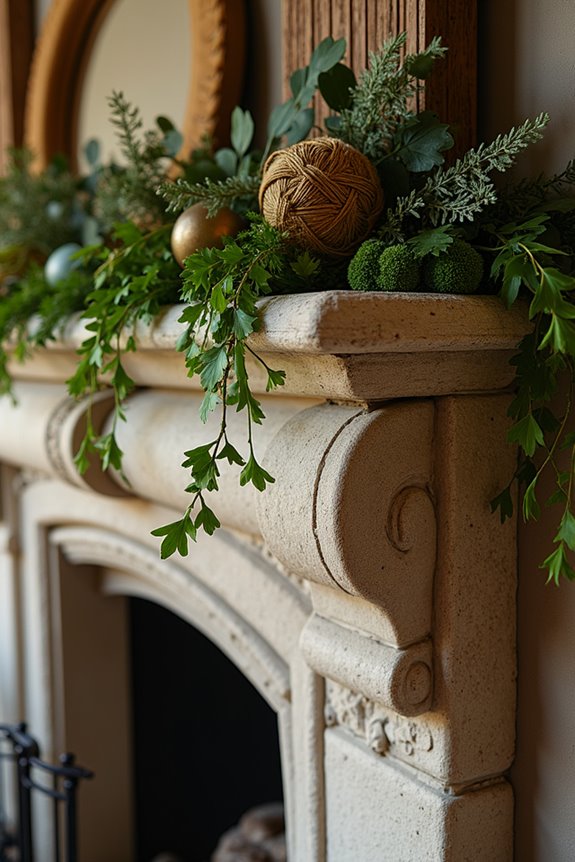
Combining wood, ceramic, and metal creates depth that keeps eyes moving across your mantel decor. Layer greenery—potted plants, garlands, fresh stems—to bring seasonal color and life. Arrange textures intentionally, placing taller sculptural pieces behind shorter items for that dynamic, dimensional feel.
Balance matters. Heavier materials need lighter pieces beside them to avoid clutter. A metal candlestick pairs beautifully with a soft fern. Wood beams ground ceramic vases perfectly.
Stick to one cohesive color palette throughout your layering and textures, keeping everything harmonious with your room. This approach moves your mantel from flat and forgettable into something inviting.
Use Negative Space to Let Your Mantel Breathe
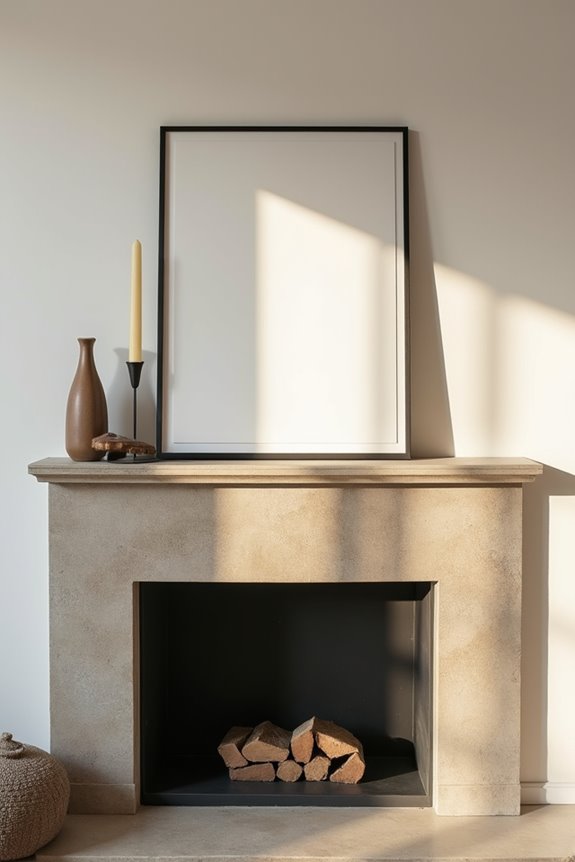
I’ve learned that leaving empty space on your mantel is just as important as filling it—it prevents your display from feeling cramped and chaotic. When you reserve about 30-40% of your mantel as strategic empty space, you give your eyes a place to rest and allow your focal piece (like that gorgeous mirror or artwork) to stand out. Think of negative space as the silence between notes in a song; it’s what makes the music work.
Strategic Empty Space
One of the biggest mistakes I see when decorating mantels is cramming in too much stuff, and honestly, it’s totally understandable—you’ve got beautiful items, you want to show them off, and that empty space can feel like wasted real estate.
Here’s the truth: empty space around your objects matters. It’s what separates a cluttered mantel from one that feels organized and calm. When you leave breathing room around objects, you create balance that draws attention to what matters most.
Why empty space works:
- Prevents mantel clutter from overwhelming your room
- Makes focal points stand out and feel deliberate
- Gives your eye somewhere to rest
- Creates an organized, sophisticated look
Think of it this way: less stuff, more impact. That’s good layering.
Visual Balance Through Restraint
Trust the quiet. A breathing mantel works when nothing fights for attention—when each object has room to exist without clutter demanding explanation.