Most fireplace problems boil down to seven fixable issues. Your damper might be closed—check that brass nut indicator. Cold flues need warming with kindling for 10–15 minutes. Wet firewood (above 20% moisture) reduces performance, so use seasoned wood instead. Airtight homes need fresh air; crack a window while burning. Gas fireplaces require working ignition systems and open fuel lines. A dirty thermocouple prevents ignition. Finally, call a professional if problems persist or safety concerns arise. Each fix takes minutes to diagnose, and the right solution is likely within reach.
Reason #1: Your Damper Is Closed or Stuck
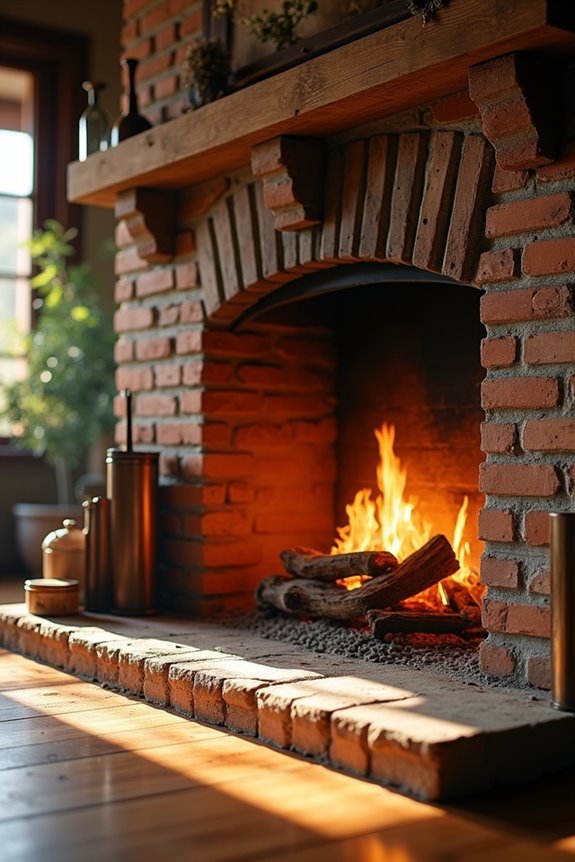
Why won’t your fireplace draw smoke outside? I’d bet your damper is closed. It’s the most common culprit, and honestly, the easiest fix.
A closed damper is the most common reason your fireplace won’t draw smoke outside—and it’s the easiest fix.
Your damper blocks the smoke path between your fireplace and chimney. You have two main types: a flue damper inside your fireplace, or a top damper on your roof. Before lighting any fire, always verify which one you have and check its position.
For top dampers, locate the brass nut indicator. If it’s sitting in the bracket, it’s closed. Above the bracket means it’s open.
Can’t see into your chimney? A closed damper plate might be blocking everything. Even if it was open yesterday, check it again today. Sometimes dampers stick or accidentally close. Open it, and your ventilation problems disappear.
Reason #2: Cold Flue Preventing Draft (And How to Warm It)
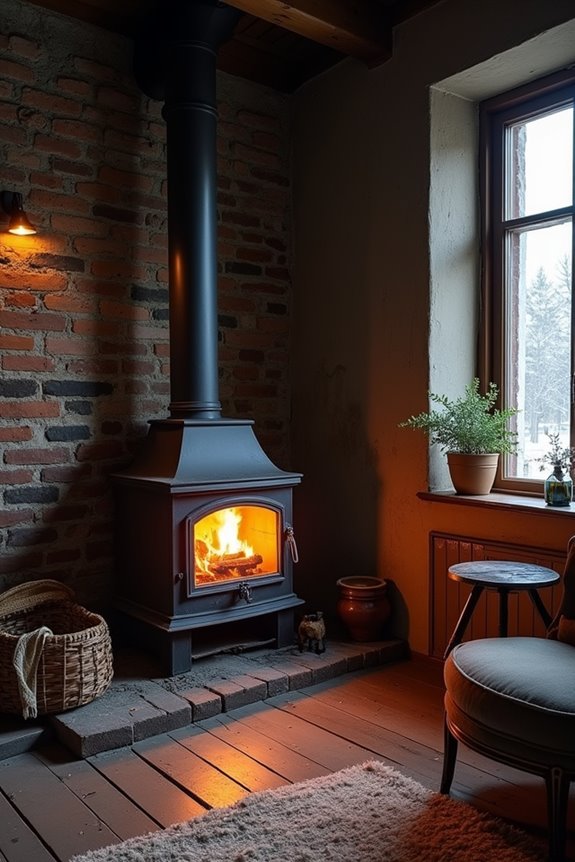
Once you’ve confirmed your damper is open, there’s another common reason your fireplace won’t draw properly: a cold flue. A dense column of cold air in your chimney resists rising, which prevents smoke and heat from drawing up naturally.
Here’s what works:
| Method | Time | Difficulty |
|---|---|---|
| Small kindling fire | 10-15 min | Easy |
| Pilot light flame | 5-10 min | Very Easy |
| Top-down fire | 15-20 min | Moderate |
| Controlled warm-up | 20+ min | Easy |
Warm the flue first. Light a small fire near the chimney entrance before adding larger wood. Start modest, then gradually build up as temperature rises and draft improves. Top-down fires work well because hot embers heat your chimney as they burn downward, pulling air upward naturally.
Avoid loading a large fire initially. Instead, test draft with something small first.
Reason #3: Your Firewood Is Too Wet or Green
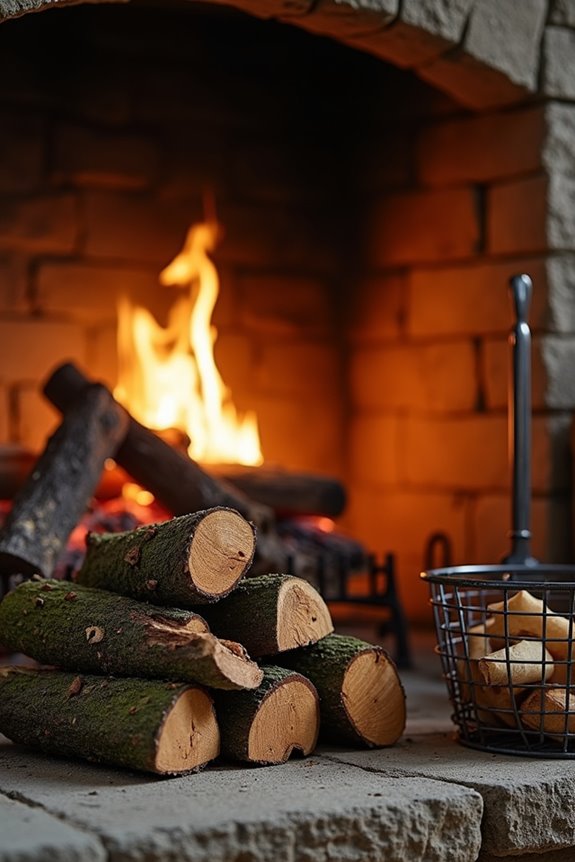
Wet or green firewood is often the culprit behind a sluggish fireplace. The good news is you can fix it by understanding what makes wood burn well. You’ll want your firewood to have a moisture content between 10–20%, which means it’s seasoned enough to ignite easily and produce heat instead of smoke. Here’s how to identify truly dry wood and pick the right fuel for a roaring fire.
Optimal Moisture Content Levels
How’s your firewood treating you—or rather, how’s it *burning*?
Wood moisture content significantly affects performance. You’ll want to aim for 10–20% moisture for optimal results. Here’s why: wood outside this range smokes excessively, reduces heat output, and worsens creosote buildup.
| Moisture Level | What Happens | Your Result |
|---|---|---|
| Below 10% | Burns too fast | Less heat, more creosote |
| 10–20% | Burns cleanly | Best burn efficiency |
| Above 20% | Excessive smoke | Poor performance, creosote risk |
I recommend grabbing an inexpensive moisture meter—they’re widely available and helpful. Test your wood before burning. This simple step improves your fireplace experience, giving you cleaner burning and reliable warmth.
Identifying and Selecting Dry Wood
Most fireplace problems trace back to one culprit: wet or green wood. Selecting the right firewood significantly improves your fireplace experience. Here’s what I do to maintain burning efficiency:
- Use a wood moisture meter to verify moisture content stays between 10–20%
- Look for dark, seasoned wood that feels noticeably lighter than fresh logs
- Store firewood off the ground, covered, for six months to a year
- Never burn recently cut wood—it produces excessive smoke and creosote buildup
Dry firewood burns hotter, cleaner, and requires less energy for combustion. I’ve found that investing in proper storage and a moisture meter prevents creosote formation and maximizes heat output. When you choose seasoned wood, you’re choosing reliability and better performance from your fireplace.
Reason #4: Your Home Isn’t Getting Enough Fresh Air
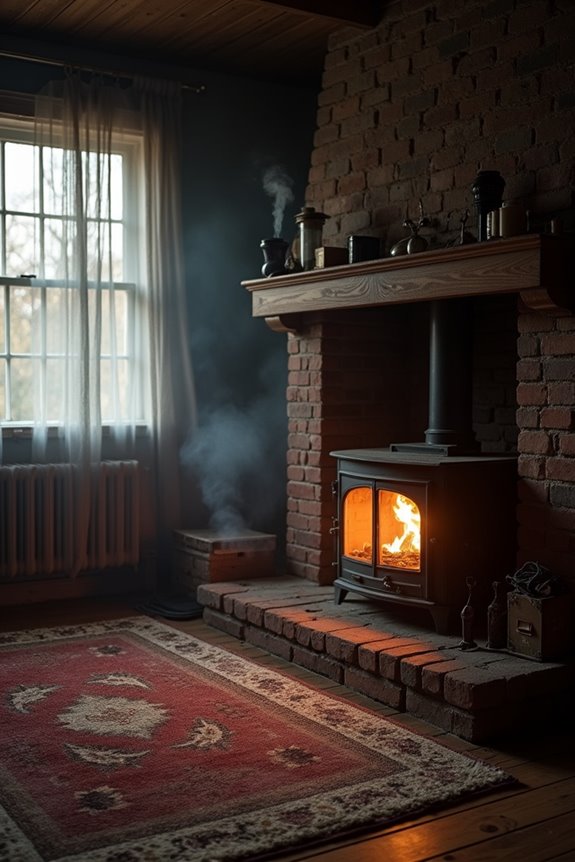
Ever noticed your fireplace struggling to draw smoke up the chimney? Your home might be too airtight. Here’s what happens: when you burn a fire with all doors and windows closed, your home creates negative pressure. This pulls smoke back into your room instead of up the chimney.
You need make-up air to replace what escapes. Fresh air sources like windows, doors, and small leaks usually supply this naturally. But modern, well-sealed homes trap air inside, blocking proper fireplace airflow and draft.
The simple fix? Crack a door or window slightly while your fire burns. You’ll immediately notice the difference—smoke’ll rise properly, and your draft improves. This quick test costs nothing and reveals whether your home’s air tightness is the real culprit.
Reason #5: Gas Supply or Ignition System Isn’t Working
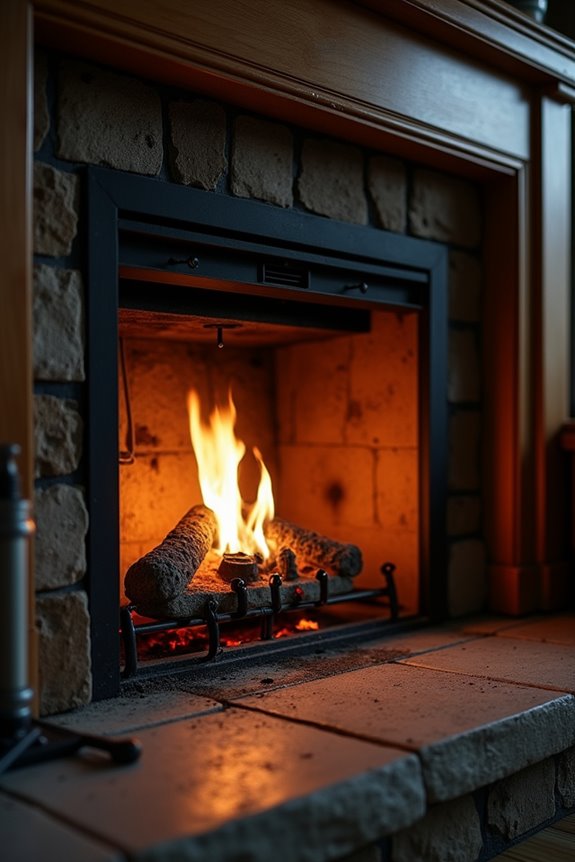
When your fireplace won’t ignite, I’d look at two main culprits: your gas supply and your ignition system. You’ll want to check if gas is actually reaching your fireplace—is the line open, is there fuel in the tank—and confirm your ignition components like the thermocouple are working properly. Both your gas and electricity need to be functioning together for that spark to happen, so we’ll tackle each one.
Gas Supply Problems
Why won’t your gas fireplace ignite, even though you’ve checked everything else? Let me walk you through the gas supply problems that might be stopping you.
Your ignition system needs gas to work, and here’s where things get stuck:
- Check your gas valve – Make sure it’s fully open; a partial valve blocks enough gas from reaching the burner
- Look for an off valve – Someone may’ve turned it closed, cutting your gas supply entirely
- Inspect your gas line – Empty tanks or kinked lines prevent fuel from flowing
- Test your power interruption – A tripped circuit breaker kills electricity to your ignition system and thermocouple
Troubleshooting can feel frustrating, but these fixes are manageable. Start here, and you’re already solving the problem.
Ignition System Failures
Your fireplace’s ignition system is like the spark plug in a car—without it working properly, nothing else matters. Most ignition problems stem from a few common culprits.
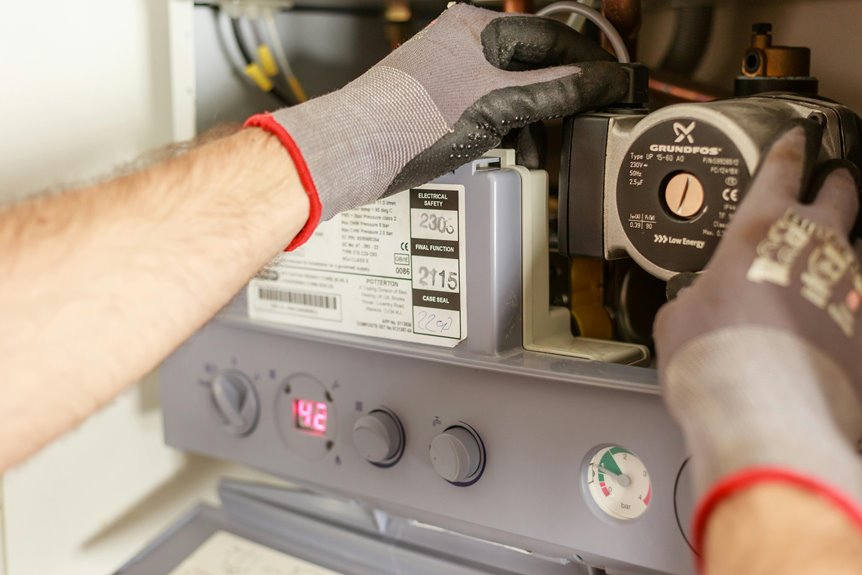
First, check your pilot light. If it’s out or flickering, your fireplace won’t ignite. Next, inspect the thermocouple/thermopile—this sensor tells your system the pilot’s burning. When it’s dirty or misaligned, ignition fails.
You’ll also need electricity reaching your unit, since igniters and valves depend on it. Verify your gas line is open and your gas pressure is adequate; low pressure prevents ignition entirely.
If these checks don’t help, call a certified professional. They’ll safely diagnose your ignition system, gas supply, and electrical components without risking your safety or your home.
Reason #6: Dirty or Faulty Thermocouple
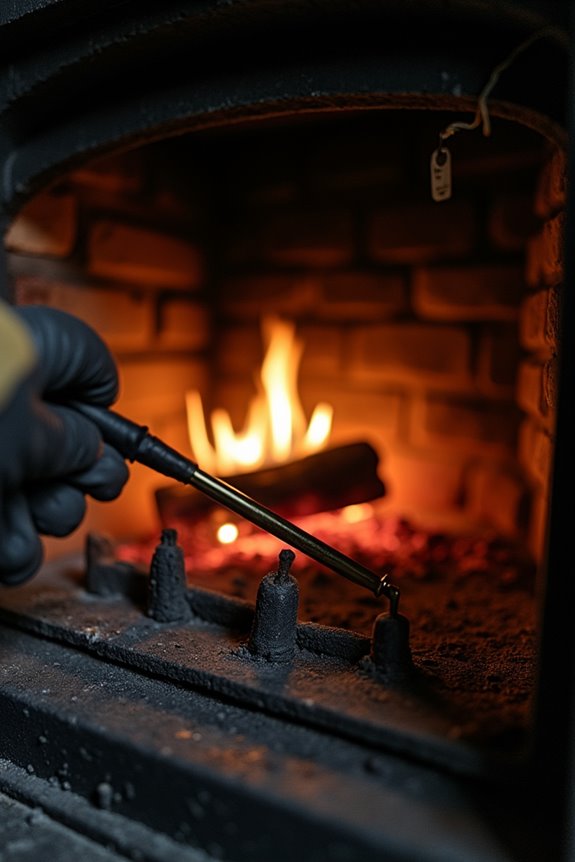
Have you ever wondered what’s keeping your pilot light from staying lit? I’d bet your thermocouple needs attention. This safety device acts as your flame sensor, detecting heat and opening the gas valve so your fireplace can function properly. When carbon buildup covers it, the thermocouple can’t do its job.
Here’s what I recommend:
- Turn off your fireplace completely
- Gently clean the thermocouple with fine grit sandpaper until it shines
- Test your fireplace by cycling it on and off several times
- Replace it if cleaning doesn’t work
The thermocouple’s just a fragile metal rod near your pilot, so handle it carefully. Protect nearby components and avoid disturbing wiring or gas tubing. Most folks find cleaning solves the problem, but replacement’s your next logical step if it doesn’t.
When to Call a Professional
When should you stop troubleshooting and call in reinforcements?
Some fireplace problems need a trained technician. If your gas fireplace won’t ignite repeatedly, your pilot light refuses to stay lit, or you smell unusual burning odors, don’t keep experimenting. These signs indicate it’s time for professional diagnosis.
Here’s what I won’t tackle myself: gas supply verification, ignition module repairs, or electrical work. These require licensed professionals who prevent dangerous leaks and hazards.
You’ll want a certified technician for safety inspections too. They’ll check your entire system—pilot light components, venting, gas pressure—confirming everything works safely.
Think of it this way: calling a pro early saves frustration and keeps your home secure. Annual maintenance visits catch problems before they worsen. When you’re unsure, reach out.