
I’ve claimed thousands in office decor deductions most business owners miss. Here’s the deal: wall art, plants, rugs, and lighting qualify when they’re in client-facing spaces or dedicated home offices and serve a business purpose—not personal comfort. You’ll need receipts, purchase dates, and a clear log showing each item’s business value. Document everything with photos and purpose statements. Choose Section 179 for immediate deductions or depreciation for spreading costs over seven years. The specifics on calculating your exact deduction and staying audit-proof follow below.
What Qualifies as Tax-Deductible Office Decor?
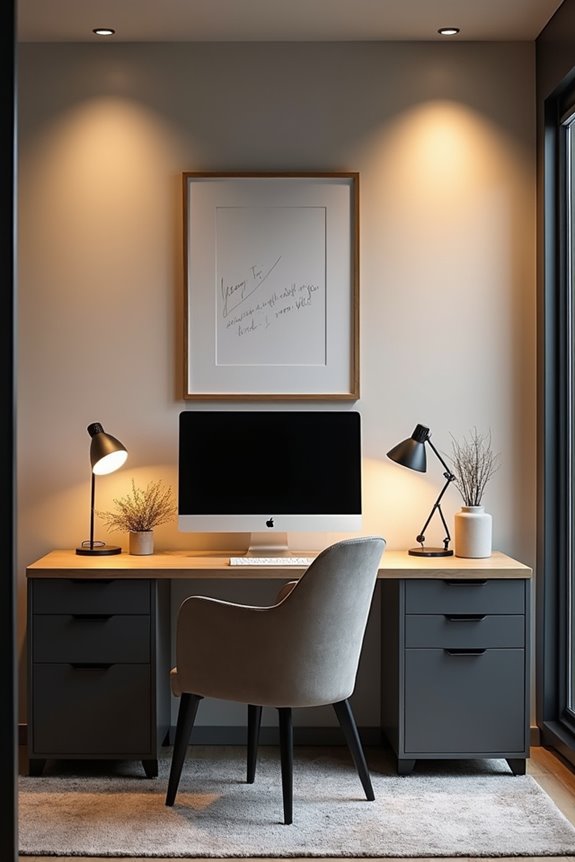
So, can you really write off that new painting for your office? Yes, you can—if it meets the right criteria. Your office decor qualifies for a deduction when it’s ordinary and necessary for your business, not just something you enjoy personally. Think wall art, framed prints, rugs, plants, and lighting. These items work if they’re in a client-facing space or your dedicated home office. The key is demonstrating it improves your professional environment. You’re not decorating for comfort; you’re investing in your workspace’s appearance. Short-term rental owners can deduct themed decor that supports their branding too. Keep receipts and document where you placed everything. That’s your foundation for claiming these office decor deductions confidently.
Section 179 vs. Depreciation: Which Saves More on Office Decor

You’ve got two main paths to deduct your office furniture: take the whole cost upfront through Section 179, or spread it across seven years with depreciation. The right choice really depends on whether you’re making good money this year or expecting higher income later, since immediate deductions help most when your tax bracket’s higher. I’ll walk you through how each strategy works, so you can pick the one that saves you the most.
Immediate Deduction Benefits
When it comes to slashing your office decor tax bill right now, you’ve got two main options: Section 179 and bonus depreciation.
Section 179 lets you deduct up to $2.5 million in 2025 (jumping to $2.56 million in 2026) immediately. That’s money back in your pocket this year, not spread across seven years. Bonus depreciation goes further—it’s 100% for 2025 and 2026, letting you write off your entire decor purchase the moment you place it in service.
Here’s the real benefit: if your income’s solid right now, these immediate deductions reduce your current tax bill significantly. You’re not waiting years for relief. You’re getting it now, when you need it most. That’s cash flow that helps your business grow today.
Multi-Year Cost Spreading
Immediate deductions work well when your business is performing strongly, but not every year delivers consistent results. That’s where depreciation becomes relevant. When your income decreases or profits are uncertain, depreciation allows you to spread your office decor costs over seven years, claiming deductions gradually instead of all at once.
Here’s how they compare:
| Strategy | Best For | Tax Benefit |
|---|---|---|
| Section 179 | High-income years | Full deduction now |
| Depreciation | Lower-income years | Deductions spread out |
| Bonus Depreciation | Qualifying items | Immediate 100% expensing |
Here’s the reality: depreciation doesn’t eliminate your deduction—it postpones it. You’re reserving tax savings for years when you need them most. Additionally, unused Section 179 deductions carry forward, letting you claim them later. That’s flexibility working in your favor.
Income-Based Strategy Planning
Which deduction method actually puts more money back in your pocket? That depends on your income situation right now.
If you’re earning strong income this year, Section 179 delivers immediate tax savings. You’ll deduct your entire office furniture cost upfront, slashing your taxable income today. A $50,000 desk setup? Gone from your taxes immediately.
But here’s the twist: if your income’s lower or you expect it to grow, depreciation wins. You’ll spread deductions across multiple years, offsetting future earnings when you might need it more.
I recommend asking yourself this: do I need tax relief now or later? High earners benefit from Section 179’s immediate impact. Growing businesses gain more from depreciation’s long-term strategy. Either way, you’re covering your office investment intelligently.
Prove Your Decor Is Business Use (Not Personal Enjoyment)

How do you prove that the plants in your office are there for business, not just because you like looking at greenery?
Document your business use intentions. Write down why you bought each piece of decor—did it improve client impressions, create a professional atmosphere, or boost productivity for your team? Keep receipts showing purchase dates and amounts.
Take photos of items in your workspace. Snap shots showing how they’re positioned and used during work activities. This visual proof helps substantiate your claim.
Maintain a simple log noting each item’s placement date and business purpose. For example: “Artwork purchased January 15 to enhance client waiting area and reflect company branding.”
The key? Show that your decor serves your business directly, not your personal comfort.
Calculate Your Office Decor Deduction: The Step-by-Step Formula

Now that you’ve proven your decor serves your business, you’ll need to track exactly what you spent and pick the right method to write it off—and I’m going to walk you through both. You’ll gather your receipts and dates, then decide whether to deduct everything at once, spread the cost over several years through depreciation, or use Section 179 if it qualifies. The formula is straightforward once you know which path fits your situation.
Tracking Purchase Receipts
Keeping solid records of your office decor purchases is essential for tax deductions. Your receipts are critical documentation come tax time.
Here’s what I track for every purchase: the date I placed the item in service, the exact amount spent, and what the piece actually does for my business. I keep receipts organized in a folder, both digital and physical copies.
For each decor item, I note its purpose. Does it create a professional client impression? Does it boost team morale? I document where it sits in my office too.
This documentation backbone lets me confidently claim deductions. Without it, I’m vulnerable if the IRS questions my write-offs.
Applying Depreciation Methods
Once you’ve organized and tracked your receipts, you’re ready to determine what you can deduct. I’ll walk you through depreciation methods that’ll help you maximize your deduction over time.
The standard approach uses the 200% declining balance method under MACRS with a seven-year recovery period. Here’s why this matters:
- You’ll deduct larger amounts early, helping your cash flow now
- It’s the most aggressive method allowed, benefiting your business sooner
- You’re following IRS rules while staying strategic
- Alternative methods like 150% declining balance or straight-line work too
- Choosing wisely means keeping more money in your pocket
I recommend working with your tax professional to pick the method matching your income situation. This decision impacts your bottom line.
Three High-Value Decor Deductions Most People Miss
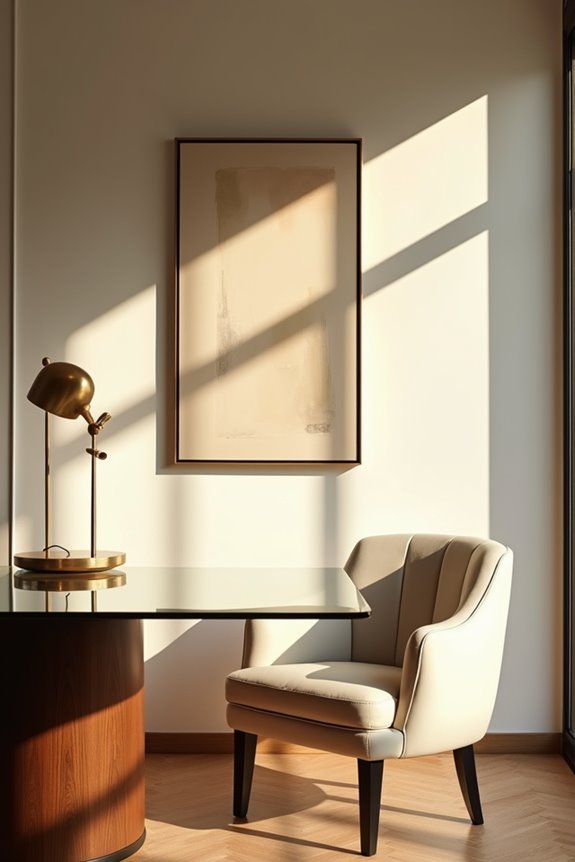
When you’re shopping for office upgrades, you’re probably thinking about what looks good—not what the IRS will let you write off.
Here’s what most business owners miss: high-end lighting systems, custom area rugs, and professional wall art are often overlooked opportunities for Section 179 deductions. I see it all the time—people skip these because they seem decorative rather than necessary.
The truth? They’re both. That premium desk lamp improves your client-facing space *and* qualifies for immediate deduction. Same with quality rugs that define your workspace professionally.
The key is keeping detailed records: purchase dates, invoices, and your business purpose. Document *why* each piece matters for your professional image, not personal preference. Then you’re protected, and your deductions are solid.
Home Office Decor: How to Allocate and Deduct It

I want to show you how to maximize your home office deductions, because if you’re working from home, you need to follow specific rules to claim your decor legally. The key is understanding whether your office qualifies for deductions in the first place, then figuring out which expenses you can deduct immediately versus which ones you’ll depreciate over time. Let me break down exactly how to allocate and deduct your home office decor so you capture every available tax benefit.
Exclusive Business Use Requirements
How’s your home office doing double duty? Here’s the thing: the IRS won’t let you deduct decor if your space pulls double duty as a guest room or craft corner. You’re part of a community that gets this, and we’re here to help you navigate it.
Your space must be exclusively for business. That’s non-negotiable. Here’s what matters:
- Your principal place of business deserves full deduction protection
- Mixing personal and business use disqualifies the entire deduction
- You’re building credibility with consistent, dedicated workspace
- This requirement protects your financial future
- You’re joining thousands who claim legitimate deductions confidently
When you dedicate that corner exclusively to work, you’re creating a professional identity that the IRS respects. No exceptions, no gray areas—just clear, exclusive business use.
Allocating Decor Expenses Properly
So you’ve got your dedicated home office space—great. Now, here’s where allocation matters. You’ll split your decor expenses based on how much of your home you actually use for business. Direct expenses—like a desk lamp or motivational artwork you buy specifically for your office—are fully deductible. Indirect expenses, though? Those get apportioned. If your office takes up 20% of your home, you deduct 20% of shared decor costs.
Track everything. Keep receipts, note purchase dates, and document why each piece supports your work. A plant improves air quality and client experience. A rug defines your professional zone. These aren’t luxuries; they’re strategic business investments. When you connect decor to productivity and professionalism, you’re building a defensible deduction that holds up.
Depreciation Versus Immediate Deduction
When you buy that desk lamp or office plant, you’ve got a choice: deduct it all this year, or spread the deduction across several years through depreciation.
Here’s what makes sense for your situation:
- Immediate deduction lets you write off smaller items right now, giving you quick tax relief
- Section 179 lets you deduct up to $2,560,000 in 2026, helping your cash flow instantly
- Depreciation spreads costs over seven years, lowering your taxable income gradually
- Lower-cost items usually get immediate deduction, keeping things simple
- Expensive pieces often benefit from depreciation, matching expenses with long-term value
I recommend expensing most decor immediately unless it’s pricey furniture. You’ll get faster tax benefits, less paperwork, and join other business owners maximizing their deductions now, not later.
Track Receipts and In-Service Dates for Audit Safety
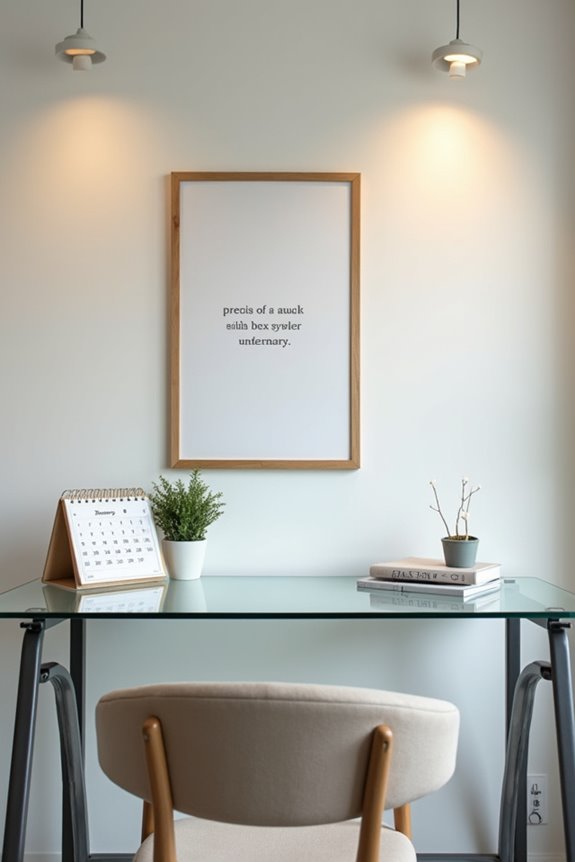
Every office decor purchase you make deserves a paper trail, and this matters more than most business owners realize.
Here’s what I do: I keep every receipt, vendor invoice, and photo of each item placed in my office. When you can show the IRS exactly what you bought, when you bought it, and where it went, you’ve built your deduction defense. I note the purchase date and the placed-in-service date—that’s when the item actually starts working in your space.
This documentation makes your deduction stronger and more defensible. You’re not just claiming expenses; you’re providing a credible record that protects your deduction and keeps audits manageable.
When Income Limits Cut Your Office Decor Deduction
Why does your income matter when you’re deducting office furniture? Your earnings determine how much of your Section 179 deduction you can actually use this year.
Here’s what happens:
- You’re interested in that $500,000 furniture purchase, but your income’s only $5,000
- The IRS won’t let you deduct more than you earn
- Your unused deduction carries forward, waiting for better years
- Depreciation spreads costs over seven years instead
- Higher income years mean you finally use those carried-forward deductions
If your income is high, take the full Section 179 deduction immediately. When income’s tight, depreciation becomes your advantage—it matches deductions to future years when you’ll earn more. I’ve seen this approach work well for small business owners facing lean seasons. You’re not losing money; you’re just timing it smarter.
What the IRS Will Reject: And Why Your Decor Might Not Qualify

Not every piece of decor you buy qualifies for a deduction, even if it sits in your office.
The IRS scrutinizes decor purchases carefully. I’ve seen deductions rejected because items served personal enjoyment rather than business purpose. That expensive painting? If it’s just pretty to look at, it won’t fly. The IRS wants to see how your decor directly supports your business space and activities.
What gets rejected most often? Items not tied to your industry, personal comfort pieces, and anything used during personal stays. Your decorative throw pillows probably won’t qualify.
Here’s what matters: your decor must be ordinary and necessary for your specific industry. Keep detailed purchase records and document exactly where each piece sits in your business space. This documentation protects you during audits.
Set Up Your Audit-Proof Decor Deduction Log

How do you turn a stack of receipts into ironclad proof that your office décor deserves a tax deduction?
You create a deduction log that tells your story. I track each purchase by date, amount, vendor, and business purpose. This simple system organizes scattered paperwork into evidence the IRS respects.
Here’s what makes your log bulletproof:
- Date placed in service – proves when décor actually started working for you
- Vendor details – shows legitimate business purchases, not personal shopping
- Business purpose statement – connects décor to client perception and branding
- Category labels – organizes wall art, rugs, plants, lighting for quick reference
- Depreciation notes – clarifies whether you’re expensing or depreciating items
I centralize everything with time-stamped filing, then reconcile monthly with my accounting records. You’re not just deducting; you’re documenting.