The Oval Office derives its authority from three interconnected design elements. First, classical architecture—pedimented doors and deep cornices—pairs with hidden lighting that softly washes the ceiling and highlights the Presidential Seal. Second, the walls display presidential portraits and busts that chronicle America’s history across generations. Third, the Resolute Desk, crafted from timber Queen Victoria gifted in 1880, anchors eight presidencies with quiet strength. These three elements function as an integrated system. Each one builds authority through its relationship to the others.
Classical Details and Strategic Lighting: Building Visual Grandeur
How’d you like to work in a room that whispers power without shouting it?
A room that whispers power without shouting it—that’s the art of intentional design.
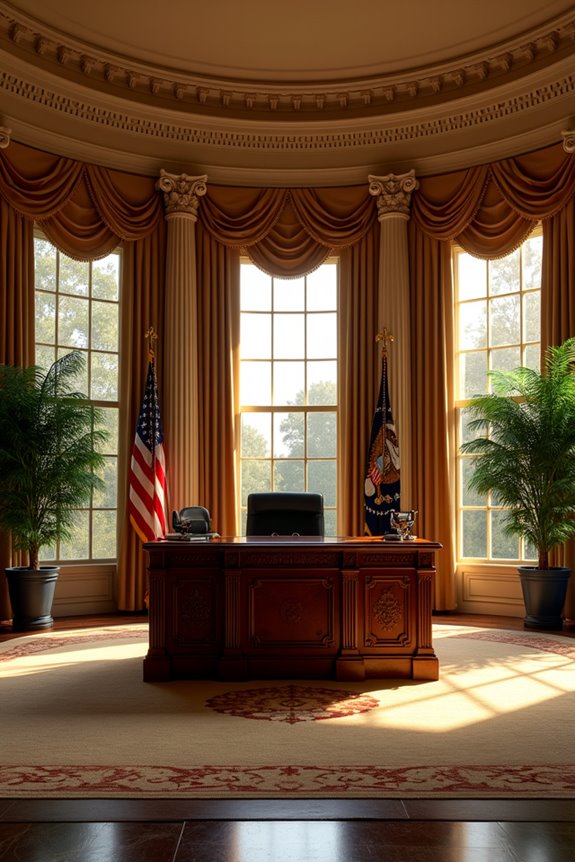
The Oval Office does exactly that through masterful design choices. I’ll tell you, those pedimented doors and built-in bookcases create instant gravitas. They’re not random—they’re intentional statements of authority.
But here’s where it gets clever: the lighting. Hidden bulbs wash the ceiling with soft light, avoiding clunky chandeliers. This strategic approach highlights the Presidential Seal on the ceiling medallion beautifully. The deep bracketed cornice frames everything perfectly.
Those south-facing windows? They frame the South Lawn view while controlling privacy. And the gold furnishings? They catch that carefully orchestrated light, creating warmth and confidence.
Classical details meet smart lighting strategy here. Together, they build visual grandeur that feels earned, not forced.
Presidential Portraits and Busts: The Authority Gallery
What makes a room feel like the seat of power? I’ll tell you: it’s the faces watching from the walls.
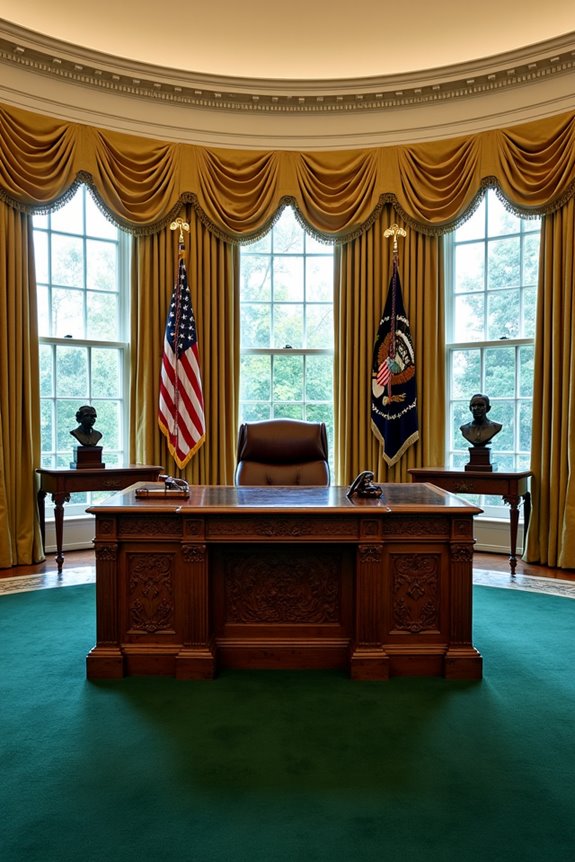
The Oval Office’s presidential portraits and busts create what I call an authority gallery—a rotating wall of carefully chosen leadership. You’ll find Washington’s portrait, often the Rembrandt Peale or Charles Willson Peale version, commanding the north mantel. Lincoln portraits appear frequently across administrations, symbolizing continuity and gravitas.
Here’s what works: these aren’t permanent fixtures. Each president rotates the White House collection to reflect their vision. Andrew Jackson’s portrait has appeared multiple times. Norman Rockwell works have flanked the Resolute desk.
You’re not just looking at art—you’re standing in a gallery of American authority. Every portrait tells a story about power, legacy, and who gets to sit in that chair.
The Resolute Desk: Where History Meets Power
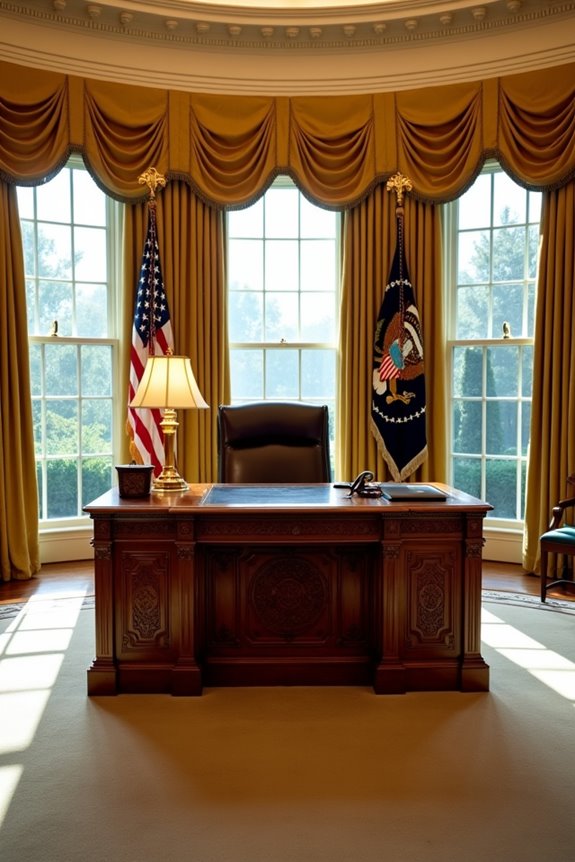
Now, here’s where the real power sits—literally. The Resolute desk isn’t just furniture; it’s a statement. Crafted from HMS Resolute timber and gifted by Queen Victoria in 1880, this presidential desk carries centuries of history. Here’s what defines it:
- Symbol of continuity – Since Carter’s presidency in 1977, eight presidents have used it, creating an unbroken chain of authority
- Jacqueline Kennedy’s vision – She brought it to the Oval Office in 1961, reshaping how we understand presidential workspaces
- Selective legacy – Notable figures like George H. W. Bush chose different desks, demonstrating that presidents shape their own power narrative
- Desk symbolism – It represents the weight of decisions and the White House’s enduring strength
This desk reminds us that where you sit matters.